
Wet wipe sachet packaging needs to accommodate a folded substrate and its intended liquid loading while supporting a clear first opening. The wipe, liquid, pouch and filling process should be reviewed as one application. A packet that looks suitable when empty does not demonstrate how the filled product will behave.
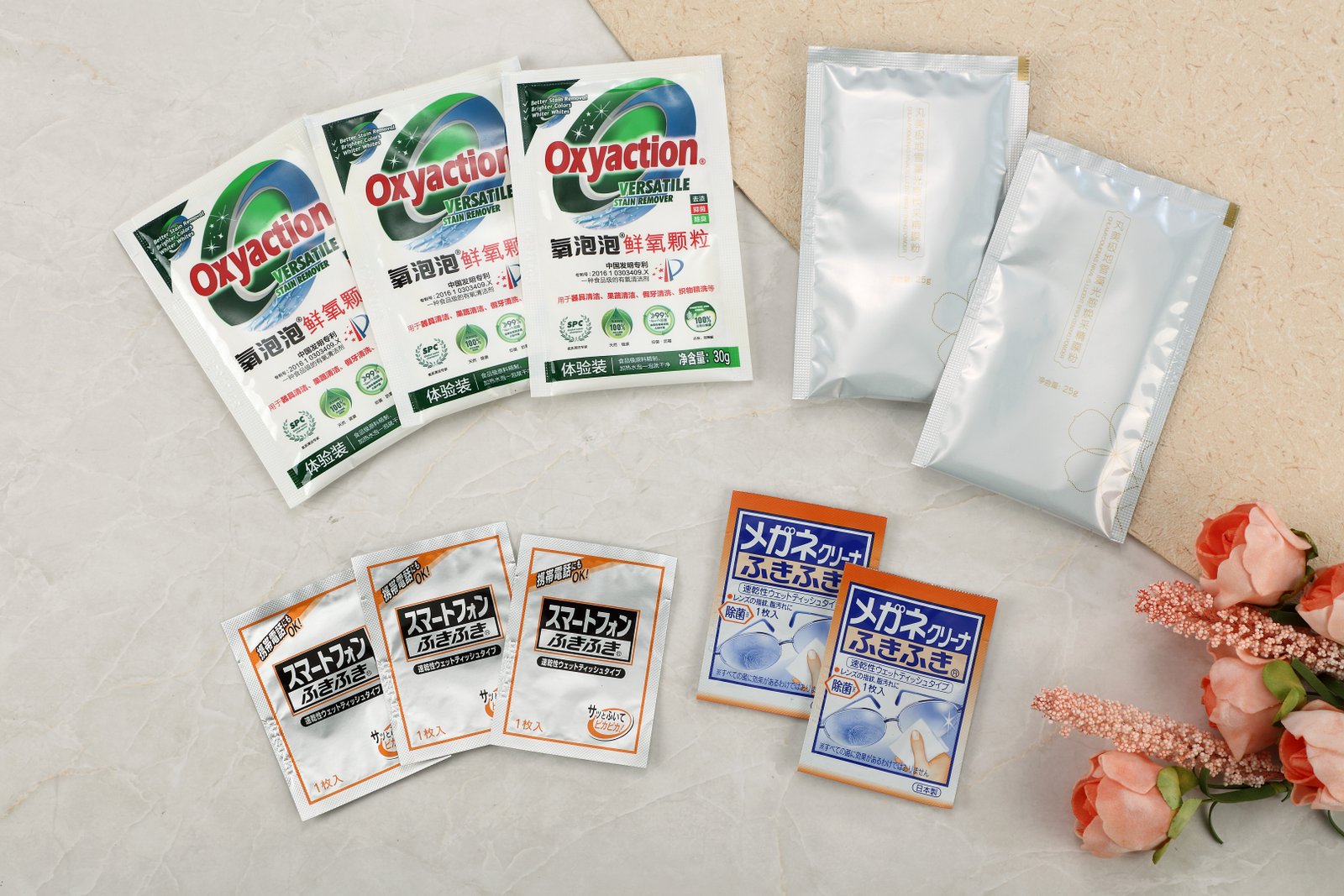
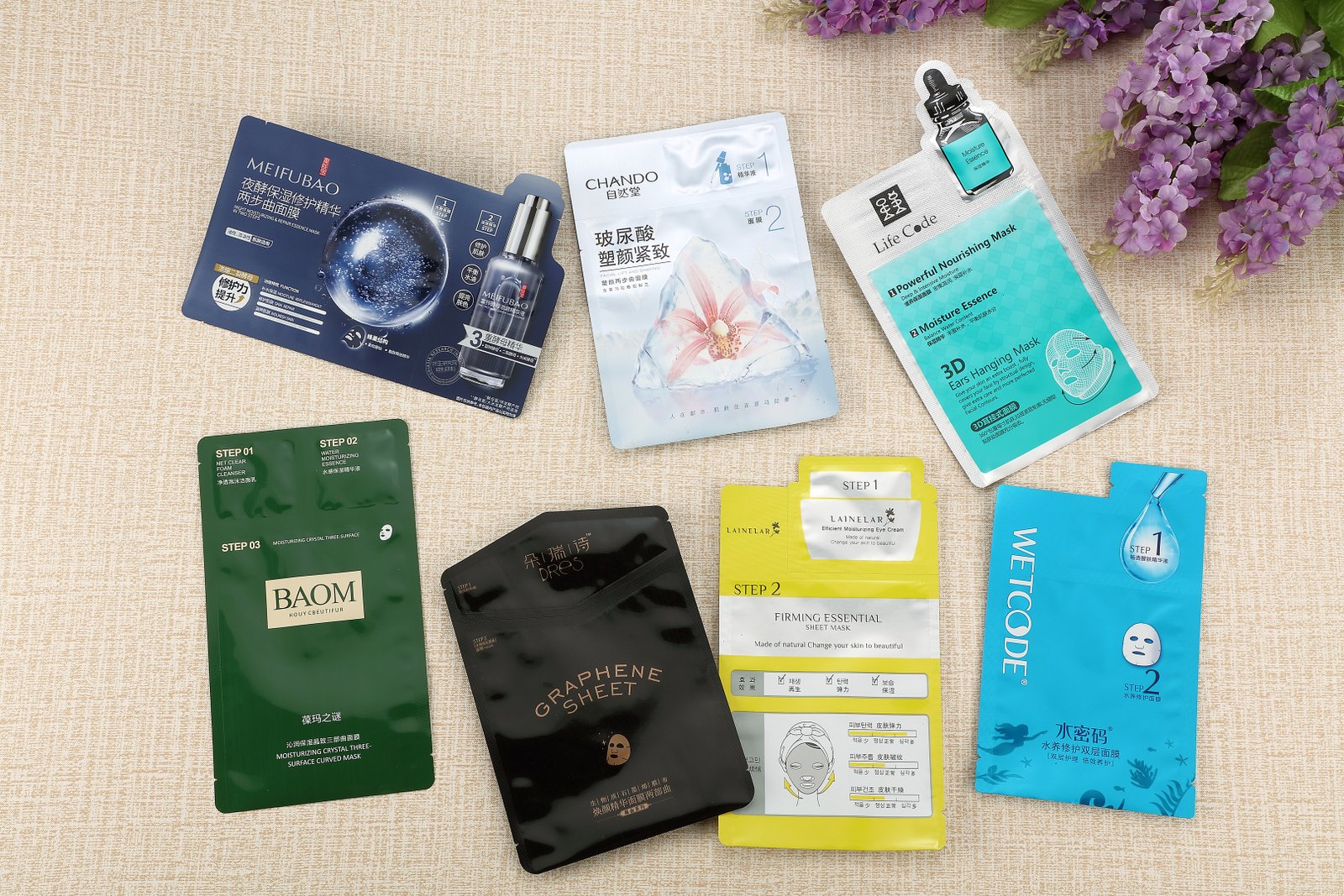
The catalog references in this guide show small individual packets and another cosmetic pouch format for comparison. They provide visual starting points, not evidence of a specific liquid specification or product claim. Use the nine decisions below to prepare a practical discussion with the supplier, product team and filler. Keep the intended wipe and formula identifiable throughout sampling and approval.
1. Wet Wipe Sachet Packaging Starts with the Wipe
Specify the substrate, folded dimensions and intended liquid amount. Describe how the wipe will be inserted and removed rather than providing only a nominal packet size. Ask the product team to identify the version used in each evaluation.
A change in fold or substrate can affect the working space needed inside the pouch. Use a representative wet sample to review insertion and filled shape. Keep those observations with the dimensional drawing. Wet wipe sachet packaging should be sized around the complete intended contents, not around an empty packet selected because its front-panel proportions look familiar.
2. Review Liquid Contact Requirements
Provide relevant information about the liquid formulation and expected storage conditions to the responsible technical teams. Ask for a proposed construction suitable for assessment with that formulation. Do not transfer a specification from another wipe solely because the packets are the same size.
Evaluate the selected material and relevant package features with the intended product. Keep the formula and sample references traceable. A visual sample may help communicate finish and shape, while compatibility and product retention require their own evidence. Discuss these as distinct approval questions rather than treating an attractive printed appearance as confirmation of the complete application.
3. Translate the Fold into Usable Space
Request a drawing that separates the outside dimensions from the space available after seals and opening features are allowed for. Confirm how dimensions are measured. The folded wipe may need an access path as well as enough room to sit inside the packet.
Test the target configuration with the intended contents. Observe where the wipe settles and whether the pack can be handled without interfering with the final closing area. A size proposal should remain open to practical revision until these questions have been reviewed. Record the approved fold and liquid loading alongside the wet wipe sachet packaging drawing.
4. Connect Insertion and Final Closure
Ask the filling partner to explain the intended sequence for inserting the wipe, adding the liquid where applicable and closing the packet. Review access and orientation on the proposed construction before the artwork is finalized. Different operations can create different handling needs.
During trials, document the condition of the sealing area and the preparation method. Review visible observations alongside the agreed package checks. A sample with unknown filling conditions gives a less useful basis for approval. Keep the product, package and process references together so the supplier and filler can investigate a question using the same evidence.
5. Assess the Product under Agreed Conditions
Identify the storage and handling conditions relevant to the intended use and distribution. Agree what will be observed, when samples will be reviewed and who will interpret the results. Avoid assuming one brief empty-pack demonstration answers the completed-product question.
The technical team should define the relevant acceptance plan, including any product and package checks needed. A description such as moisture-retaining is not a substitute for that plan. Wet wipe sachet packaging should be assessed with identified samples and the intended contents. Keep observations specific enough to distinguish a package issue from a change in the liquid, wipe or preparation process.
6. Make Opening and Removal Practical
Ask first-time users to follow the proposed instructions with filled samples. Watch how they grip the packet, find the tear feature and remove the wipe. Record any need to pull, reposition or tear beyond the intended area rather than summarizing the trial only as easy or difficult.
Review the opening and the folded wipe together. A wider opening may change handling, artwork or construction, so discuss alternatives with the packaging team. Check what happens to any remaining packet pieces during the task. These observations help wet wipe sachet packaging support the actual use sequence without requiring an unsupported claim about consumer preference.
7. Keep the Intended Use Clear
Have the responsible product team approve product identification, instructions and any required warnings or claims. The pack designer should not infer an intended use from the presence of a wipe. Keep the artwork connected to the approved formulation and product brief.
Evaluate the layout at actual printed size and leave important text clear of seals and cutting areas. Review how the pack is held while instructions are read. If multiple variants share a layout, check that their identities remain clear after removal from the outer carton. Save the released text and graphic revision with the specification.
8. Review Individual and Grouped Packing
Define how the packets will be counted, grouped and distributed. A packet intended for a kit may rely on different outer communication from a packet sold individually. Review both the closed arrangement and the individual item a user will eventually hold.
Agree the handling and shipping checks relevant to the completed package. Record the quantity basis and any variant mix in the packing instruction. Wet wipe sachet packaging should be released with its outer arrangement identified so the buyer does not compare different commercial scopes as if they were equivalent. Changes in grouping can create another practical review even when the primary packet stays unchanged.
9. Save the Complete Approved Configuration
Release the wipe reference, fold, liquid formulation and loading, pouch drawing, material proposal, opening and artwork as one identifiable configuration. Include relevant evaluation records and the people responsible for approval. Keep any unresolved issue visible before production release.
For repeat production, review proposed changes to the substrate, formula, fold, equipment or distribution. Decide which previous evidence remains applicable and what needs another check. A controlled wet wipe sachet packaging record gives the supplier and filler more useful information than a general request to repeat a familiar-looking pack without identifying the contents and preparation conditions.
A practical planning example
Consider an illustrative individual-wipe brief in which the pouch size is selected first and the folded wipe is changed later. The new fold may still fit inside the outside dimensions but create a different insertion or removal experience. The relevant next step is a filled review of the changed configuration, not approval from the old photograph.
The team identifies the new wipe version, records the liquid loading and evaluates insertion, sealing and first opening. If the drawing changes, the artwork template is updated as part of the same revision. This scenario explains an approval approach and does not report a customer result, hygiene performance or a storage-life outcome.
Keep a simple record of sample identity, product preparation, observations and decisions. It lets the next wet wipe sachet packaging discussion begin with evidence about the tested configuration rather than assumptions based on the dimensions of an empty packet.
Wet Wipe Sachet Packaging decision record
| Record | What to identify | Decision to capture |
|---|---|---|
| Product | Contents, version and intended quantity | Requirements confirmed by the product team |
| Package | Drawing, construction and opening | Approved specification and sample reference |
| Process | Filling, closing and handling conditions | Relevant trials and unresolved questions |
| Release | Artwork, quantities and commercial scope | Named approvers and current revision |
Wet Wipe Sachet Packaging FAQs
Can a wipe pack be sized from the liquid amount alone?
No. Include the wipe substrate, folded size, insertion and removal requirements alongside the intended liquid loading.
Does a wet wipe packet establish a particular product claim?
No. Claims and intended use should be approved by the responsible product team using the evidence relevant to the formulation and application.
Should first opening be tested with a folded wipe inside?
Use relevant filled samples so the review covers grip, tearing and actual wipe removal rather than only an empty pouch.
What changes should be reviewed before a repeat order?
Review changes to liquid, substrate, fold, loading, construction, filling or handling against the approved configuration and decide which checks need repeating.
Plan your next packaging discussion
Dachuan Packaging is based in Shantou, Guangdong, China. Share the product, intended format, fill amount, quantity and filling requirements through our packaging inquiry page. Include the decisions that still need supplier input so the team can discuss a relevant proposal and sampling route.
Continue with our related packaging planning guide, or browse the product catalog for visual references. For barcode planning, see GS1 Canada’s barcode guidance; for the role of seal-strength evaluation, see ASTM’s F88/F88M overview. Match external guidance to the actual application with the responsible technical team.