
Packaging drop test plans should say what package is being evaluated, which handling events the test represents and what counts as unacceptable damage. For a filled pouch, the test object could be a single retail unit, a full case or a parcel containing several products. These arrangements answer different questions. Start by identifying how the pouch actually moves through the sales and distribution channel.
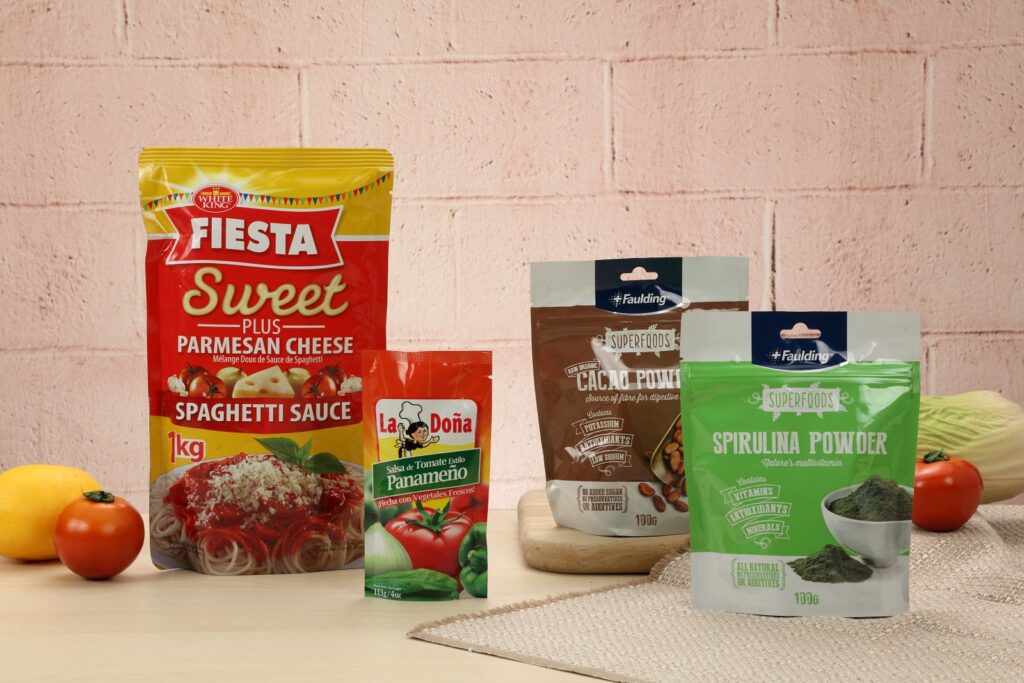
The photos below illustrate stand-up and spouted pouch formats. They help identify areas worth looking at, such as corners and closures, but establish no performance result. The eight checks are designed for teams preparing a brief for a packaging lab or an internal comparison. Formal testing requires the selected procedure and the correct setup.

1. Packaging Drop Test Plan: Start with the Decision
Define the question in one sentence. A team might want to compare two case inserts, investigate leaking returns or qualify a new packed configuration against a customer requirement. The objective determines which samples are needed and which result is useful. Identify who will review the outcome and what that person is expected to approve.
Separate an exploratory comparison from an evaluation under a specified procedure. In a comparison, the team may choose a repeatable setup to isolate one difference. If a customer names a method or a certification is required, give the laboratory the exact procedure and requested scope. Use the lab’s instructions for sample preparation and reporting. A quick check at a warehouse should be documented with its actual scope.
2. Identify the Complete Packaged Product
Describe what the sample includes. For a pouch shipped in a case, record the pouch construction and closure, the contents and fill, the number of packs, the inner arrangement and the case reference. For a parcel containing a single pouch and unrelated items, describe their positions and any dividers, padding or other components. Prepare a photograph or drawing showing how the shipment is packed.
Use representative contents and packaging. If a substitute fill is proposed for practical reasons, document how its relevant characteristics compare and what conclusion the substitute can support. Consider where the contents move or where the closure sits when the shipment is tipped. Keep the assembled unit identifiable so later observations can be tied to the exact configuration tested.
3. Select the Procedure with the Distribution Route in Mind
Map the points at which the packaged product is transferred and handled. A full case might be opened at a distributor before individual units are sent to customers. The parcel arrangement therefore deserves its own review. Ask the team what is known about actual handling, including any recurring complaints and the condition of the outside packaging when goods arrive.
Use that information when discussing the procedure with a laboratory. The International Safe Transit Association groups procedures by their intended use, including screening and simulation. Select a procedure that fits the configuration and objective. Some distribution questions also involve vibration, compression or environmental conditions. Identify those separately in the brief so an impact check is interpreted within its defined scope.
4. Agree on What to Inspect Before the Test
Write down what would count as unacceptable damage to the pouch, its contents, and any outer package. Define how inspectors will recognize problems such as loss of contents, damaged closure features, product that cannot be used or artwork that can no longer be read. Be specific about which cosmetic marks are acceptable and where the requirements come from.
Plan what will be checked before and after the test. Record pre-existing marks, fill or closure differences and sample IDs before the test starts. Agree on whether a seal assessment or other follow-up inspection is required. If a formal procedure is in scope, follow its restrictions on when and how specimens can be inspected or opened. Give the lab the decision criteria in writing.
5. Make Impact Orientation and Sequence Traceable
Identify the orientation of the package in a way that anyone can reproduce. For a case, label faces and the relevant edges or corners in the record. For a pouch, map the closure, top seam and lower corners to the actual orientation of the tested package. Use photographs if the sample shape is difficult to describe in words.
The selected procedure or approved comparison plan should set the conditions. Record the sequence, which sample received which impact, and any departure from the plan. Avoid combining observations from separate methods without indicating their origin. If the intent is to compare design alternatives, keep the handling and inspection consistent across the groups except for the planned design change.
6. Control Samples and Document Differences
Ask the lab and quality team how many samples and what variability the decision needs to cover. Assign a unique identifier before conditioning or testing. Record the fill lot, packaging lot and relevant closure or production details for the specimens. If a pouch is hand-filled for development, indicate which production details the specimen does and does not represent.
Keep unused comparison samples where the team requires them and separate tested units from the remaining inventory. Include any differences in assembly, conditioning or exposure in the report. A sample with an unusual fill level or damaged shipping case may still be worth inspecting, but its result should stay tied to that condition. A useful test record makes exceptions visible.
7. Read the Damage Pattern Before Choosing a Fix
After the agreed sequence, inspect the package and its contents in the order specified in the plan. Note where the damage appears and record its relation to contact points inside the case. A leak at a lower corner and a shifted cap are different observations. Photograph them with sample identity and scale so the supplier and lab can review the same evidence.
Separate what was observed from a possible cause. A crease may suggest a repeated contact point, but the record needs to show where and when it appeared. If the team proposes an insert or a different pouch position, decide which setup will help check that explanation. Keep the before-and-after results linked to both pack configurations.
8. Release a Result That Can Be Used Again
Collect the tested configuration, sample identifiers, procedure, conditions, photographs, outcomes and approval decision. Include issues that need investigation and identify the person responsible for resolving them. Specify which configurations the decision covers. A result for one fill amount or shipment arrangement should stay associated with the tested conditions.
Agree when a future change needs a review. A new closure, a larger fill quantity or a different parcel box may change the test question. Give the team the original evidence so it can decide whether the previous setup is still representative or a new test is needed. Keep the approval decision with the drawing and purchase references used by production and fulfillment.
Example: A Pouch Shipped Beside a Rigid Accessory
Imagine a spouted refill pouch sold online with a rigid accessory. In the proposed parcel the accessory can move toward the fitment. The team wants to compare two arrangements: one that uses a divider and one that fixes the accessory at the other end of the parcel. It documents the pouch and accessory positions and agrees on the inspection points before sending samples to the lab.
Each result is recorded against the arrangement and the relevant impact sequence. The team checks the fitment, closure and pouch body as well as the position of the accessory. If both arrangements meet the criteria, the recorded differences in assembly and use can inform the buying decision. Any follow-up test should identify the exact changed component and the question it is meant to answer.
Packaging Drop Test Plan approval checklist
| Stage | Record | Evidence or decision |
|---|---|---|
| Scope | Shipped unit, route and test objective | Comparison, customer requirement or other decision |
| Samples | Fill, packaging, closure and arrangement | Unique identifiers and representative configurations |
| Method | Applicable procedure and inspection timing | Recorded setup, impact sequence and any deviations |
| Results | Location and nature of damage | Acceptance decision and conditions for retesting |
Packaging Drop Test Plan FAQs
Should buyers drop a single pouch or a full case?
Choose the unit that answers the test question. If single units and full cases travel through different routes, review each configuration separately.
What does a drop test say about seal strength?
Impact testing examines the tested package after a defined event. Use a separate assessment if the decision requires a specific measure of seal strength.
Can one sample establish performance across a whole run?
Ask the lab and quality team what sampling is appropriate for the decision, the procedure and the expected variation in the packaged product.
What should the supplier receive after a failure?
Share the sample identity, configuration, test conditions and photographs of the damage. Mark observations separately from the suspected cause.
Technical references for the relevant checks: ISTA’s test procedure directory, ISTA’s design and testing guidance.
Read the guide to seal strength and leak testing and see the Dachuan Packaging catalog for format references. When requesting a proposal, send your product, dimensions, order quantity and the production questions you want to resolve to the Dachuan Packaging team in Shantou.