
Sauce sachet packaging works best when it is designed around a real serving task. A customer might squeeze ketchup onto a takeaway meal, empty a dressing into a salad bowl, or add a concentrated sauce to a recipe. Each job changes how much sauce is needed, where the user can grip the packet, and how accurately the contents need to be dispensed.
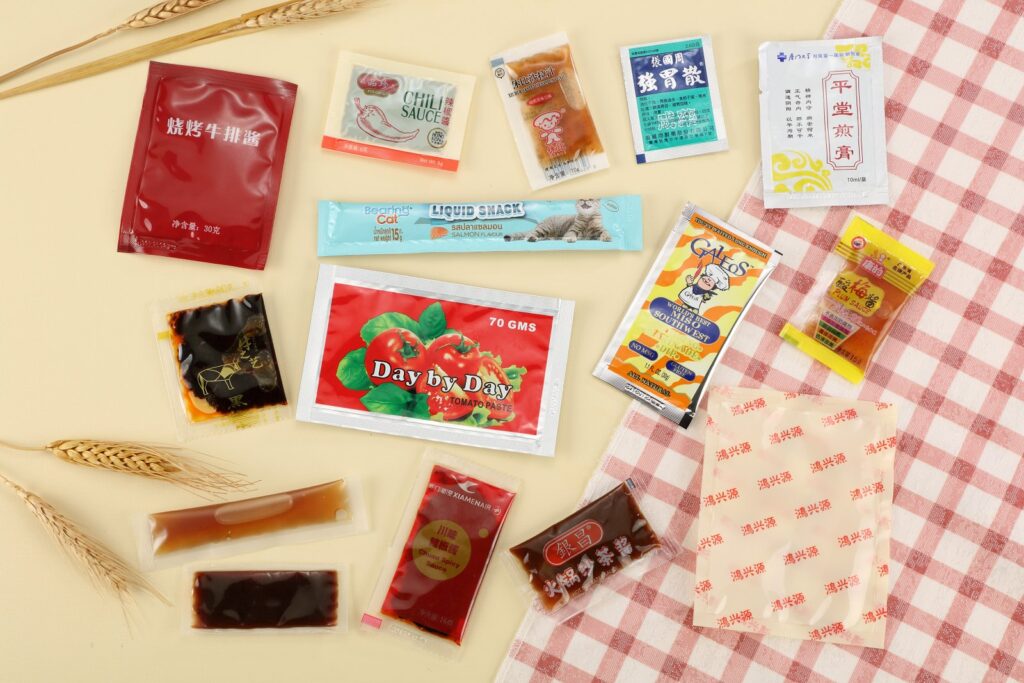
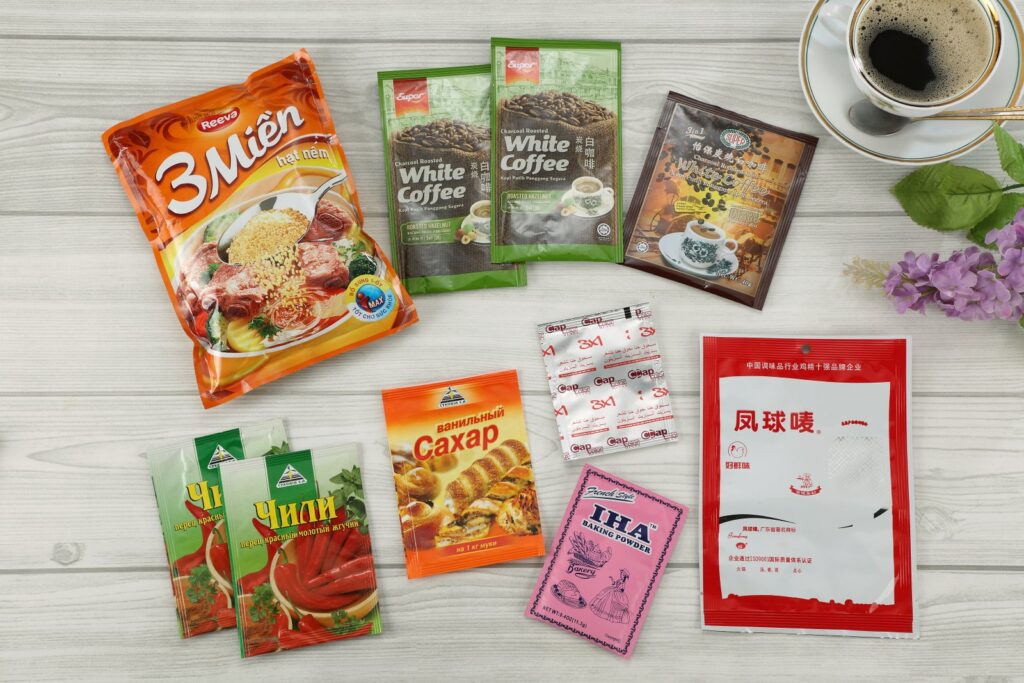
Start with the actual product, the serving instructions and the way the packet will travel. The catalog photos show small food packet and pouch formats available for discussion. The eight checks below give buyers, product teams and filling partners a way to turn a format reference into a testable purchase brief.
1. Sauce Sachet Packaging Starts with the Serving
Ask the food team to define what one portion is supposed to accomplish. For a dip, compare the proposed portion with the amount people typically use for one serving. For a sauce concentrate, check the recipe against the intended amount and any dilution instructions. Record the target quantity and the acceptable fill variation in the units the filling partner uses.
Then review usable contents as well as nominal fill. A small quantity left in the corners may be noticeable in a tightly portioned recipe. Ask testers to empty the packet as a customer would and compare what comes out with the intended serving. Record the use conditions and any observed residue alongside the filled samples. The package specification can then address the amount delivered as well as the amount filled.
2. Give the Filler a Representative Sauce
Share the intended recipe version and identify characteristics the filler needs to check. A smooth sauce and a sauce with seeds or suspended herbs can call for different trials. Ask how the product behaves at the intended filling conditions, whether it trails at the nozzle, and whether the visible ingredients are distributed consistently from one portion to another.
If a different recipe will use the same packet, identify the difference before approving a common size. An oil-rich dressing might behave differently from a thicker sauce even when both have the same target weight. Schedule trials with samples that cover the planned range. Identify which recipe was used in every run, especially when photographs of filled packets cannot distinguish them. Keep the approved filling assumptions with the product reference and the pack drawing.
3. Balance Grip Space, Usable Volume and Seal Area
Use a dimensioned sample or drawing to discuss the width, length and seal areas. Show where the filler introduces the sauce and where the user is expected to hold the pack. A narrow packet might fit a cutlery sleeve but give the customer little grip space when filled. A broad packet might offer more front panel room while taking up more space in a small order bag.
Check the empty and filled samples together. Locate the part of the body that contains sauce when the pack is standing, lying flat and held for opening. Confirm the actual geometry with the supplier, including where seals and tear features consume usable area. When a larger outline is proposed, ask which problem it solves and whether it changes machine setup or case count.
4. Look for Sauce in the Sealing Area
Use trial samples to inspect the closure area and document where product collects during filling. A small drop in a location that will later be sealed is a different observation from surface residue outside the packet. Keep these observations separate so the filler can investigate nozzle behavior, timing and pack presentation with the actual product.
Agree who will examine the seals and how suspect samples will be retained. Include the relevant process conditions, material reference and fill lot in the record. Seal strength and a check for leaks answer different questions, so the team should choose assessments that address the observed risk. If the nozzle, fill amount, sealing area or film changes, decide which observations need repeating before the revised sauce sachet packaging is released.
5. Compare Opening Over the Actual Meal
Ask testers to open the proposed packet above the type of container it will accompany. A salad bowl offers a broad target, while a narrow takeaway tray may leave less room for a sudden stream. Watch how people find the opening, where they position their fingers, and how much they need to squeeze. Include anyone who handles the packet with hands that are damp or greasy if that matches the intended setting.
Collect specific observations such as sauce landing outside the tray, a tear taking an unexpected route, or a tester having to switch grip halfway through opening. Those details give the supplier a starting point for a revision. Compare any new notch or outlet with the same portion and meal setup before approving the change.
6. Design a Packet That Staff Can Identify Quickly
If two condiments have the same outline, decide how staff will tell them apart during order assembly. Compare the printed product names at actual size and in the orientations staff see inside the carton. Different background colors can help, while a clearly readable name or variant still gives staff a direct way to check the packet.
Review the identification with kitchen staff who were not involved in the artwork design. Ask them to assemble a mixed order from the proposed packets. Observe where they pause, turn the packet over, or pick up the wrong flavor. The responsible food team should provide and approve any necessary wording. Use the supplier drawing to keep opening marks and essential information clear of cuts, folds and sealed edges.
7. Review Contact Material and Actual Delivery Conditions
Describe the sauce and how long and under what conditions it will contact the pack. Include the relevant fill, storage and distribution conditions in the brief. Ask the supplier for documentation for the proposed construction and ask the food team to review suitability for the intended use. Treat a change to the recipe or filling process as a reason to revisit the original assumptions.
Test how the packets are carried with a representative order. Compare placement under a tray, next to a cup or in a separate pocket if those are realistic arrangements. Identify where a rigid corner or folded carton presses on the packet. Record the pack configuration and the handling sequence, so the next comparison tests the same situation. Check samples after handling and note visible leaks, seal changes or trouble opening.
8. Approve an Identifiable Pack for Repeat Orders
Build a release record that connects the recipe version, target portion, packaging drawing, artwork and representative samples. Add the filling partner’s conditions and the agreed checks for both the pack and the filled portion. Specify whether the purchase covers printed reels or ready-made packets so responsibilities for forming and sealing are clear.
Include the plan for handling changes. A change from an order assembled in a restaurant to a larger meal kit operation may affect pack identification, case quantities and handling even when the sauce is unchanged. Keep the retained sample and approval details accessible to the team placing the next order. A short change review is easier when the original acceptance criteria are specific enough to compare against.
Example: A Dressing for Two Takeaway Channels
Imagine a salad dressing offered with a single bowl and with a multi-serving takeaway tray. The team initially wants one packet to serve both channels. It asks staff to assemble sample orders and invites testers to empty the proposed quantity into each container. The review records how much sauce users can remove, where it lands and whether the printed packet is easy to find in the order.
The team can then compare one common packet with two clearly identified portion sizes. For the shared option, it checks whether one packet is enough for the bowl and whether the tray needs several. For two sizes, it compares the effect on order assembly, artwork and filling. The decision record should include the selected portion and variant identity for each channel, alongside the trial conditions and the pack configuration used in the order.
Sauce Sachet Packaging approval checklist
| Stage | Record | Evidence or decision |
|---|---|---|
| Serving | Recipe version and target portion | Amount the user should be able to dispense |
| Filling | Product behavior and proposed feed setup | Representative filled samples and relevant closure observations |
| Use | Meal container and opening position | Evidence of grip and controlled dispensing |
| Order assembly | Variants and packet positions | Approved names and the packing arrangement |
Sauce Sachet Packaging FAQs
Can two sauces use the same packet dimensions?
They can be evaluated together. Compare their fill volumes, behavior near the sealing area and the amount users can remove before approving a common drawing.
Should a trial use real takeaway containers?
Use the actual container where practical. Its opening and shape determine how much space users have to position the sachet and direct the sauce.
Is a catalog sachet enough to select a material?
A photo helps identify the form. Ask for a proposed construction and review the intended recipe, contact conditions and filling process with the responsible teams.
What belongs in a first supplier brief?
Send the recipe reference, target portion, desired opening, intended filling route, delivery arrangement, variant count and the types of samples required.
Technical references for the relevant checks: ASTM’s overview of flexible seal strength testing.
Read the flexible packaging applications for food and beverages and see the Dachuan Packaging catalog for format references. When requesting a proposal, send your product, dimensions, order quantity and the production questions you want to resolve to the Dachuan Packaging team in Shantou.