
Shampoo and conditioner sachets give a travel kit two separate jobs. The first packet needs to deliver enough shampoo for the intended trial or trip. The second needs to be easy to identify and dispense after rinsing, when hands and the packet are often wet. The sachets also need to reach the user together, in the intended sequence and with instructions that fit the available print area.
A buyer can discuss either two loose packets or a connected pair. Both formats can use the same visual identity, but each has different implications for opening, filling and kit assembly. The eight checks below describe what to specify and what to observe before choosing between them.
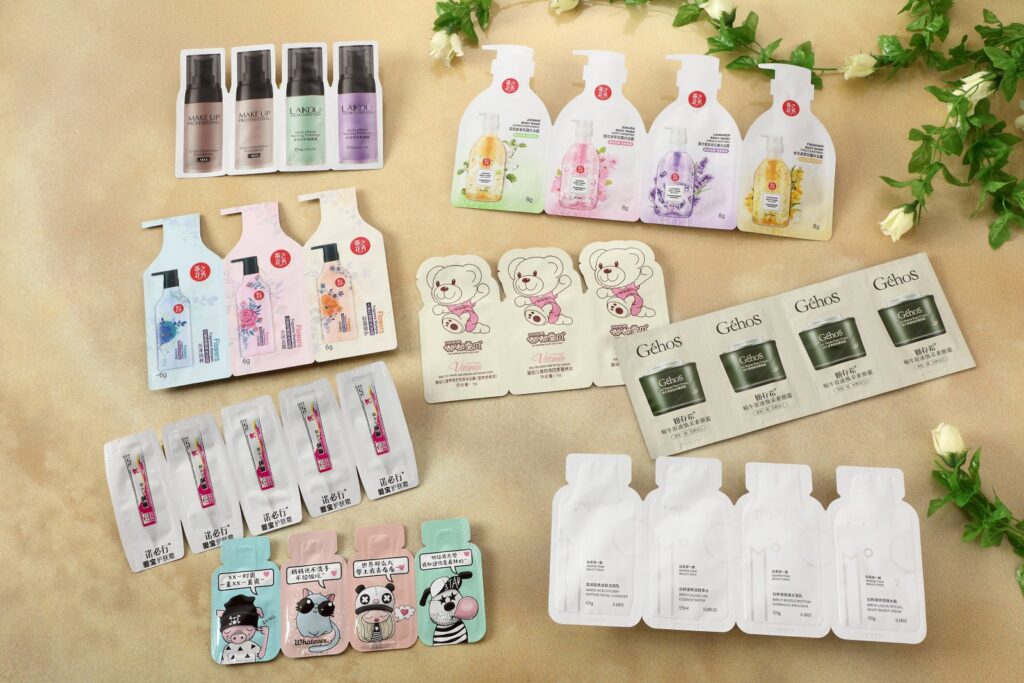
1. Shampoo and Conditioner Sachets Need Separate Portions
Record the intended use for each formula. A salon may want enough product for a particular trial routine. A travel amenity kit may prioritize one use in a small bag. The team responsible for the products should set each target quantity and identify the formula used for evaluation. Make the distinction visible in the brief even if the paired packets have the same outer dimensions.
Assess how much product a user can dispense with ordinary handling. A conditioner that clings to a corner may leave more behind than a shampoo that moves freely when squeezed. Ask testers to follow the intended routine and collect observations for both packs. A common outline can still work if both fill amounts, usable volumes and opening requirements are confirmed in the proposed construction.
2. Compare Loose Pairs with Connected Sachets
Loose packets can be placed together in a sleeve or carton. That approach lets the buyer combine variants without changing the outline of either packet, provided the assembly team can maintain the correct pairing. A connected pack keeps the pieces physically associated, while introducing a junction that needs its own drawing and use checks. Consider how the kit will be assembled before choosing.
For a connected proposal, discuss the intended order of separation and opening. One design may call for the user to separate the pockets first. Another may allow access to the first product while the second remains attached. Confirm this with representative filled samples and clear instructions. Inspect the remaining sachet after the first has been used. Keep the supplier’s accepted separation layout with the approved pack drawing.
3. Plan the Use Sequence for Wet Hands
Set up a use trial where testers handle the packets with wet hands and follow the normal sequence. Observe how they find the opening, which corner they grip, and whether the second packet is still easy to locate after the first step. Use the actual product where practical so testers experience the amount of pressure and repositioning it takes to dispense.
For a connected pair, ask a tester to handle it while keeping the unused pocket closed. Record whether the separation is clear and whether one tear interferes with the second opening or the grip area. If users repeatedly turn the pack over before they find the right feature, compare different instruction placements. Mark the location on an identified sample rather than relying on a general request for better handling.
4. Give the Two Steps Distinct, Readable Labels
Place the product name and sequence where users can see both before opening. Color can help organize the pair. Short text and a step number give the user another way to distinguish the products when the packs are wet, rotated or under different lighting. Print a proof at the proposed size and check it in the position users will hold the sachets.
Give the responsible product team the actual artwork to approve. Confirm the correct variant, directions and required product information for both packets. Look for space conflicts near the seal, separation line and opening cue. If text must appear on both sides, verify that the artwork and drawing identify the front and back unambiguously. Review both packets together whenever either design is revised.
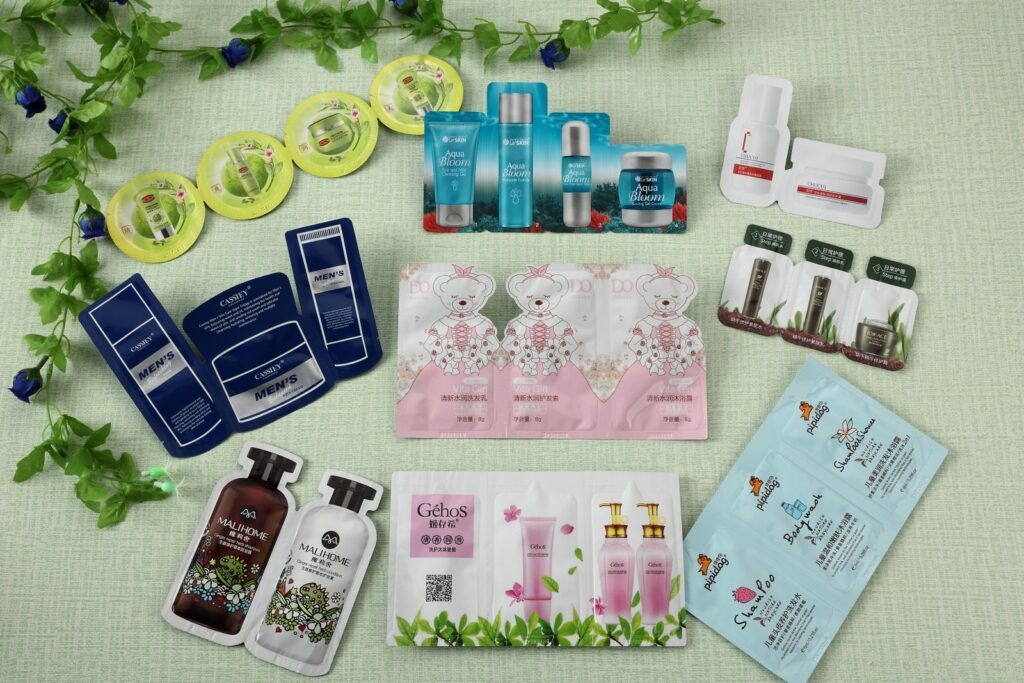
5. Ask the Filler to Evaluate Each Formula
Share the product references and proposed amounts with the filling partner. Ask what equipment and setup can handle each formula, how the packs will be supplied, and how the two products will remain distinguishable during trial and production. A connected pair can affect how filling and identification are managed. Review the supplier’s construction and filling sequence together before approving the artwork.
Include samples filled under the intended conditions. Ask the team to document visible residue in seal areas, unexpected deformation or difficulty handling the packets during the run. Record which observations belong to the shampoo and which belong to the conditioner. The trial should produce enough information for the filler and the packaging supplier to agree on the next revision or on what evidence is still missing.
6. Fit the Pair into the Rest of the Travel Kit
Use an actual kit with the proposed accessories. A comb, brush handle or stiff carton flap can create a local contact point if the sachets shift in the bag. Compare whether a small sleeve, pocket or different orientation helps keep the pair together and accessible. Ask the assembly team to compare the time and effort required for the realistic options.
Review the kit from the recipient’s perspective. A pair inserted behind an information card might look organized during packing but be hard to find when the user opens the kit. Inspect the arrangement after a representative handling exercise. Record how the packs are positioned, how the assembled kit is closed, and which parts of the arrangement matter to keeping both sachets in the intended place.
7. Create a Way to Catch Mismatched Variants
If the same kit uses several fragrances or formulas, define which shampoo and conditioner belong together. Give staff a clear reference that includes a name, code or approved sample for each pairing. Ask them to assemble mixed trial quantities and observe which distinctions remain clear when similar variants are next to each other.
Make a decision about how partial quantities and leftover packets will be identified when they return to storage. Record which version of each artwork belongs to the kit and who checks the assembled pair before release. Connected shampoo and conditioner sachets still need a correct production pairing. Loose packets add an assembly check at a separate point, so the release record should show where that check happens.
8. Approve the Sachets and the Assembled Kit Together
Keep a reference for each filled pocket, the approved artwork, the selected configuration and the intended kit arrangement. Record the intended opening and separation sequence. Where relevant, retain a complete kit so the next buyer can compare both the individual packets and the way they reach the recipient.
Before repeating the order, review changes to the formulas, target amounts, kit contents and distribution. Moving from a small amenity kit to a retail trial pack can change how people discover the instructions and how the packs are handled. Use the original evidence to decide which checks apply to the new version. Save the next revision with its own clear identifiers so the team can distinguish two approved configurations that look similar.
Example: A Trial Duo for a Salon Weekend Kit
A salon wants to place a shampoo and conditioner sample in a weekend kit with a comb and instruction card. It compares two loose sachets tucked into a paper sleeve with a connected two-pocket version. Both trial versions use the intended amounts and feature the same short step labels. The assembly team checks placement next to the comb, and a separate set of testers opens each pack in order with wet hands.
The team records which arrangement keeps the products together, how much product testers can remove, and whether the instructions stay visible at the moment they are needed. It can then choose an arrangement based on the kit, filling and use evidence. Before requesting a production quote, the buyer sends the chosen drawing, both formula references and the artwork for the complete pair.
Shampoo and Conditioner Sachets approval checklist
| Stage | Record | Evidence or decision |
|---|---|---|
| Formulas | Separate shampoo and conditioner references | Approved quantity and dispensing observations for each |
| Pairing | Loose or connected format and variant names | Matched contents for the planned kit |
| Opening | Sequence, grip and separation cues | Representative wet-hand evaluation |
| Assembly | Sleeve, comb and instruction placement | Approved kit configuration and artwork revisions |
Shampoo and Conditioner Sachets FAQs
Can the two products have different fill amounts?
Yes. Define each amount separately and ask the supplier and filler to evaluate both pockets with the actual formulas.
How should a connected pack be tested?
Use representative filled samples. Try the intended separation and opening sequence and inspect the remaining pocket after the first is used.
Should the packets rely on color for identification?
Color can support identification. Give users a readable product name or step label and check it at the intended print size.
What should a buyer retain after approval?
Keep the approved drawings, the matching artwork, the formula and fill references, and a representative assembled kit or assembly record.
Technical references for the relevant checks: FDA cosmetic labeling resources for the U.S. market.
Read the guide to sequencing multi-step cosmetic packaging and see the Dachuan Packaging catalog for format references. When requesting a proposal, send your product, dimensions, order quantity and the production questions you want to resolve to the Dachuan Packaging team in Shantou.