
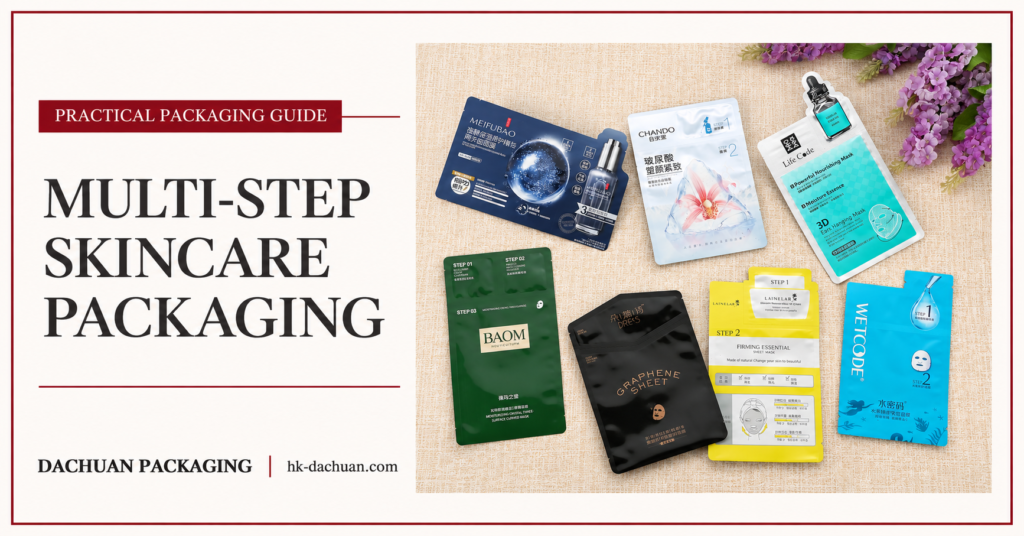
Multi-step skincare packaging organizes two or more product stages into a clear use sequence. The design must make the intended order understandable while keeping the selected products appropriately contained. Numbered graphics can support that experience, but the approved construction and filling method must define how the products are actually separated.
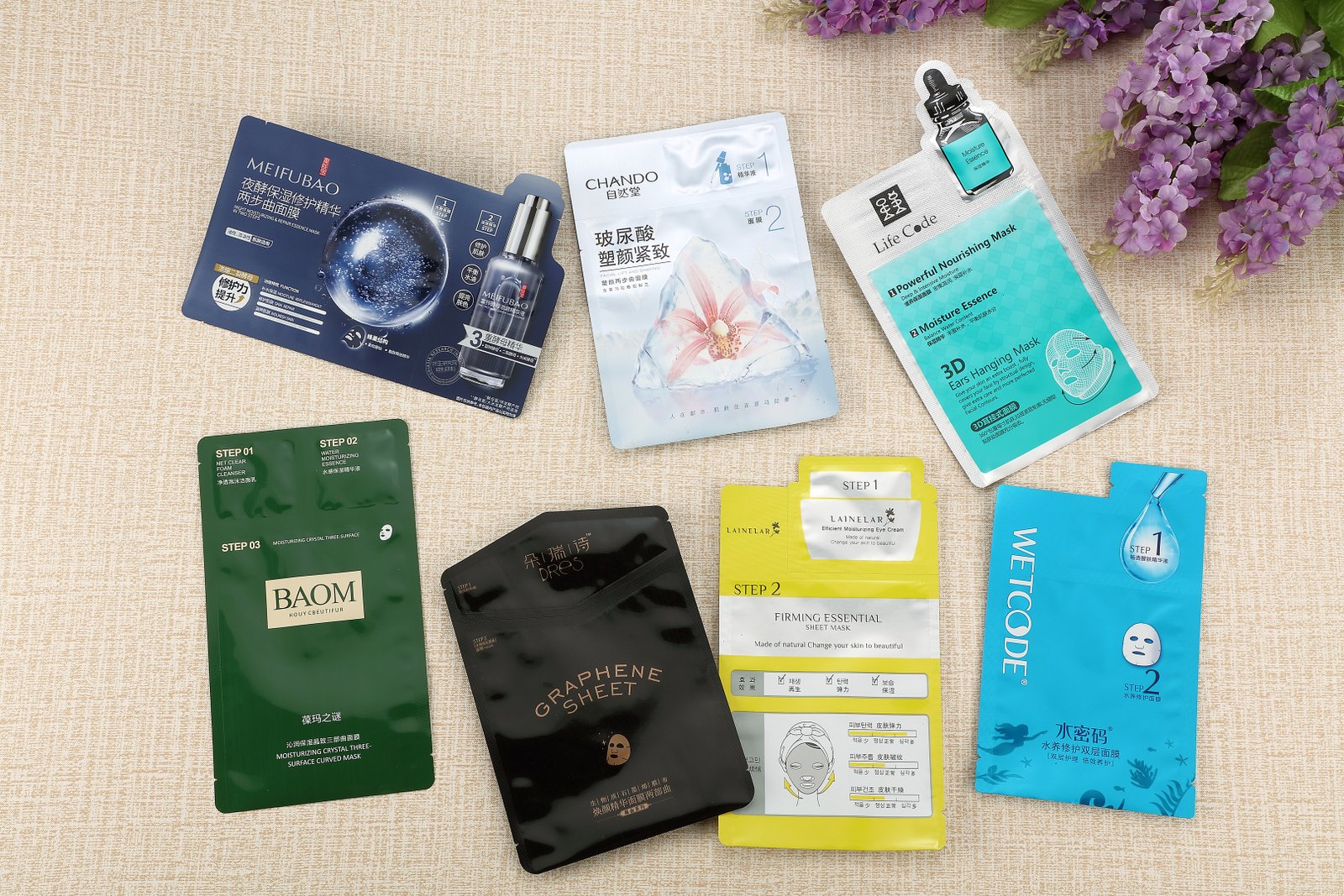
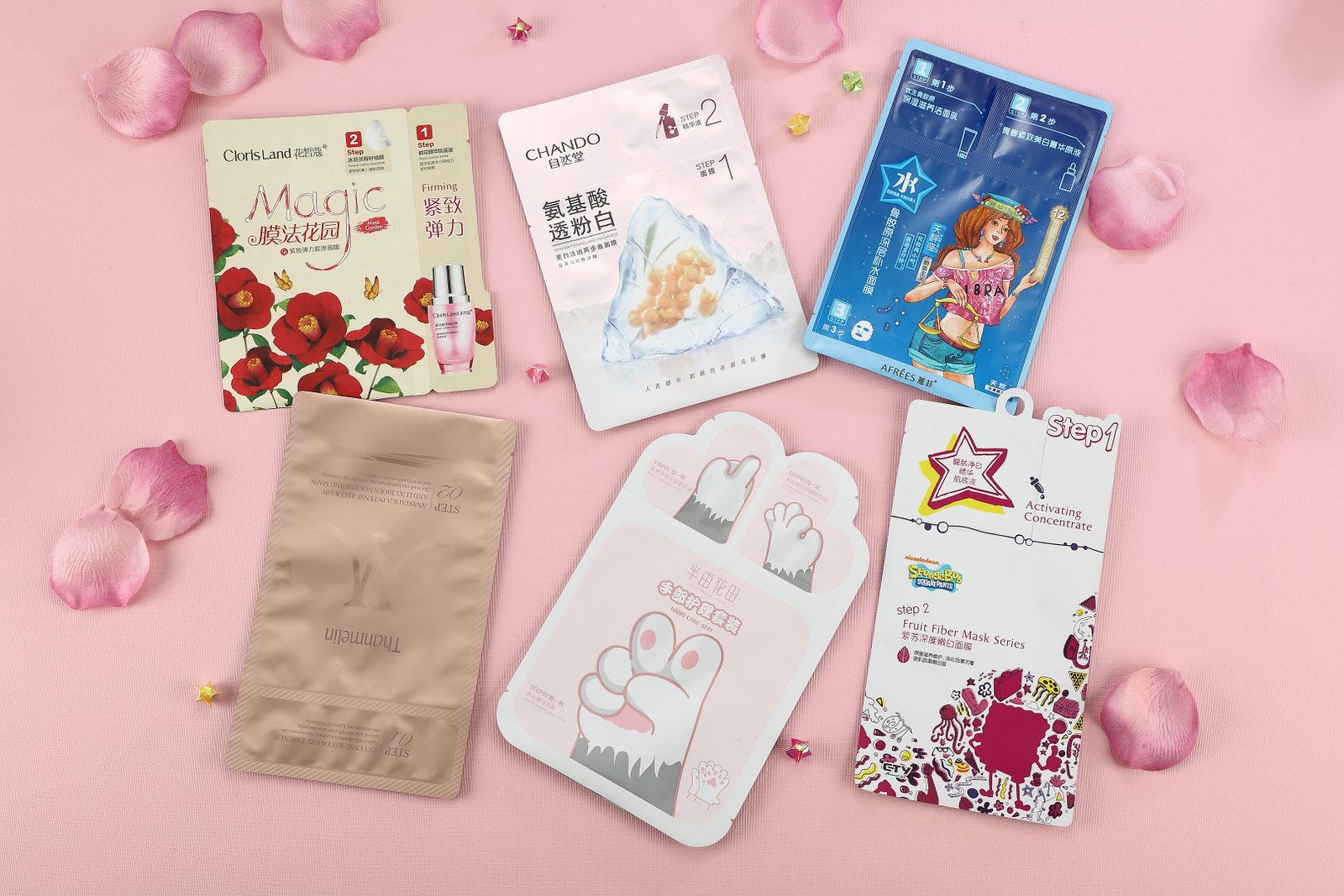
The Dachuan Packaging catalog shows cosmetic pouch presentations with different panels, silhouettes and step labels. Use these references to explain the program you are developing. Then review the nine decisions below with the product, packaging and filling teams. A useful brief describes each stage, the user’s opening sequence and the information that remains visible throughout use, rather than treating the entire set as one decorative front panel.
1. Multi-Step Skincare Packaging Starts with a Sequence
List every product stage in its intended order and define what the user does at each point. Identify whether stages are used immediately after one another or across different occasions. The packaging layout should follow that agreed use sequence.
Have the product team approve the instructions before final artwork is released. A package designer can organize information, but should not invent a treatment order from product photographs. Mark the stage names and versions in the brief so that everyone reviews the same set. If a product is removed or a step changes, revisit the full sequence rather than simply renumbering the graphics on one panel.
2. Specify Each Product Separately
Describe the contents, target quantity and relevant contact requirements for every stage. A cleanser, serum and folded mask can create different filling and containment needs even when the consumer sees them as one set. Do not reduce the brief to a single combined volume.
Give the supplier the information needed to propose a suitable construction for each part. Ask how the selected materials, seals and any separation features will be reviewed with the actual contents. Keep product versions traceable through evaluation. Multi-step skincare packaging is easier to approve when compatibility questions are tied to individual stages and then assessed again in the complete assembled format.
3. Agree the Actual Compartment Construction
Ask for a drawing that shows the intended product spaces, connecting areas, seals and openings. The number of printed panels does not establish the number of separate cavities. Confirm which areas are intended to contain product and which support identification or connection.
Review the proposal with the filling partner before committing to an outline. Check how each area will be accessed during filling and how the final closures will be made. If the set includes a detachable stage, identify the separation path and what happens to the adjacent area. Use a physical sample to resolve questions that remain unclear on a flat graphic.
4. Check Usable Space for Every Stage
Define the fill amount or component dimensions for each stage and allow for the relevant seal areas. A folded mask needs a different space assessment from a small liquid sample. Ask the supplier to label the dimensions clearly and confirm how they are measured.
Evaluate filled samples for the complete program. Observe whether one stage distorts the adjacent part or makes another opening difficult to reach. Do not judge usable capacity from the overall height and width alone. Save the fill amounts and sample reference with the drawing so later changes to the multi-step skincare packaging can be reviewed against the actual configuration used during approval.
5. Make First Opening Unambiguous
Test which feature a new user reaches for first and whether that choice matches the approved instructions. Step numbers, placement and opening cues should reinforce one another. Avoid relying only on color when stages may be detached or viewed separately.
Run the sequence with the intended contents where practical. Observe grip, tear initiation and access to each product. Record moments of hesitation, accidental opening or difficulty handling a remaining stage. These are actionable observations for the design team. A statement such as “the pack looks intuitive” is less useful than identifying the specific point where the sequence worked or needed another cue.
6. Preserve Identity after Separation
Consider what information stays with a stage after it is detached or removed from the original arrangement. The user may put a remaining portion aside or discard the first outer piece. Review whether the next action and product identity remain understandable in that state.
Use an agreed naming and numbering system across the primary pack and any outer carton. Have the responsible product team review the instructions and required copy for the actual use conditions. For multi-step skincare packaging, the complete program and the individual stage should communicate consistently. Save examples of the assembled and separated states as part of artwork review, rather than evaluating only the unopened front.
7. Plan a Realistic Filling Workflow
Explain how the different products will be supplied to the filling partner and which operations are expected at each station. Review access, orientation and final closure in the proposed construction. Ask the filler to identify practical constraints before artwork locks in an unsuitable layout.
During trials, keep filling conditions and sample identity traceable. Evaluate potential product contact with seal areas and how the partly filled set is handled before completion. A successful empty sample does not establish the workflow for the assembled product. Review the complete filled format so the packaging supplier and filler can discuss the same observations using the same drawing and revision.
8. Review the Pack as a Range
If the program has multiple variants, compare them side by side at actual size. Check that the steps are consistently located and that product differences are clear. A strong family appearance should not make distinct formulas or sequences difficult to distinguish.
Reserve space for variable information and confirm its location with production. Use the approved dieline for seals, cuts and safe areas, and agree how critical colors will be referenced for the selected material. Multi-step skincare packaging combines structure with information hierarchy. Review both together whenever the contour, stage count or product names change, rather than approving the graphics independently of the construction.
9. Release the Program with Clear Responsibilities
Create one approval record covering the product sequence, individual stages, construction, fill amounts, opening, artwork and evaluation plan. Identify the responsible approvers for technical suitability and product instructions. Keep any unresolved issue visible before production release.
For repeat orders, compare the program with the approved baseline. Changes to a serum, mask fold, number of stages or filling partner can affect the pack even when the headline design stays the same. A clear record helps the team decide what should be reevaluated. It also prevents an attractive multi-step concept from being treated as evidence for untested performance or product claims.
A practical planning example
Consider an illustrative two-stage sample program with a liquid stage and a mask stage. The team first defines the use order, product quantities and what a user should retain after opening the first stage. The supplier can then propose a layout that reflects those requirements, rather than interpreting numbered graphics as a technical instruction.
A physical trial checks the unopened set, the first opening and the remaining stage. If a step label disappears when a connecting area is removed, the artwork can be revised before production. The filling partner separately reviews how both stages are filled and closed. This example is a planning scenario, not evidence of a particular customer project or treatment outcome.
Record the stage names, product versions, drawings and sample observations together. That documentation makes multi-step skincare packaging easier to review when a brand adds a variant or changes one stage while keeping the rest of the program familiar.
Multi-Step Skincare Packaging decision record
| Record | What to identify | Decision to capture |
|---|---|---|
| Product | Contents, version and intended quantity | Requirements confirmed by the product team |
| Package | Drawing, construction and opening | Approved specification and sample reference |
| Process | Filling, closing and handling conditions | Relevant trials and unresolved questions |
| Release | Artwork, quantities and commercial scope | Named approvers and current revision |
Multi-Step Skincare Packaging FAQs
Do printed step numbers prove separate compartments?
No. Use an approved construction drawing and physical sample to confirm the actual product spaces, seals and separation arrangement.
Can every stage share one material specification?
Do not assume so. Assess the contents and requirements for each stage, then evaluate the complete assembled pack and filling process.
Should detached stages retain identification?
Review that need with the responsible product team. Consider how users will recognize the contents and next action after the original arrangement changes.
When should the full program be tested?
Evaluate the complete intended sequence with relevant filled samples before production approval, and review changes to contents, construction or the stage order.
Plan your next packaging discussion
Dachuan Packaging is based in Shantou, Guangdong, China. Share the product, intended format, fill amount, quantity and filling requirements through our packaging inquiry page. Include the decisions that still need supplier input so the team can discuss a relevant proposal and sampling route.
Continue with our related packaging planning guide, or browse the product catalog for visual references. For barcode planning, see GS1 Canada’s barcode guidance; for the role of seal-strength evaluation, see ASTM’s F88/F88M overview. Match external guidance to the actual application with the responsible technical team.