
Cream sample packaging should provide an appropriate trial quantity and a manageable opening for the intended formulation. The sample format, contents and use instructions need to be developed together. A bottle-shaped or jar-shaped silhouette can communicate a visual relationship, but it does not establish capacity or dispensing behavior.
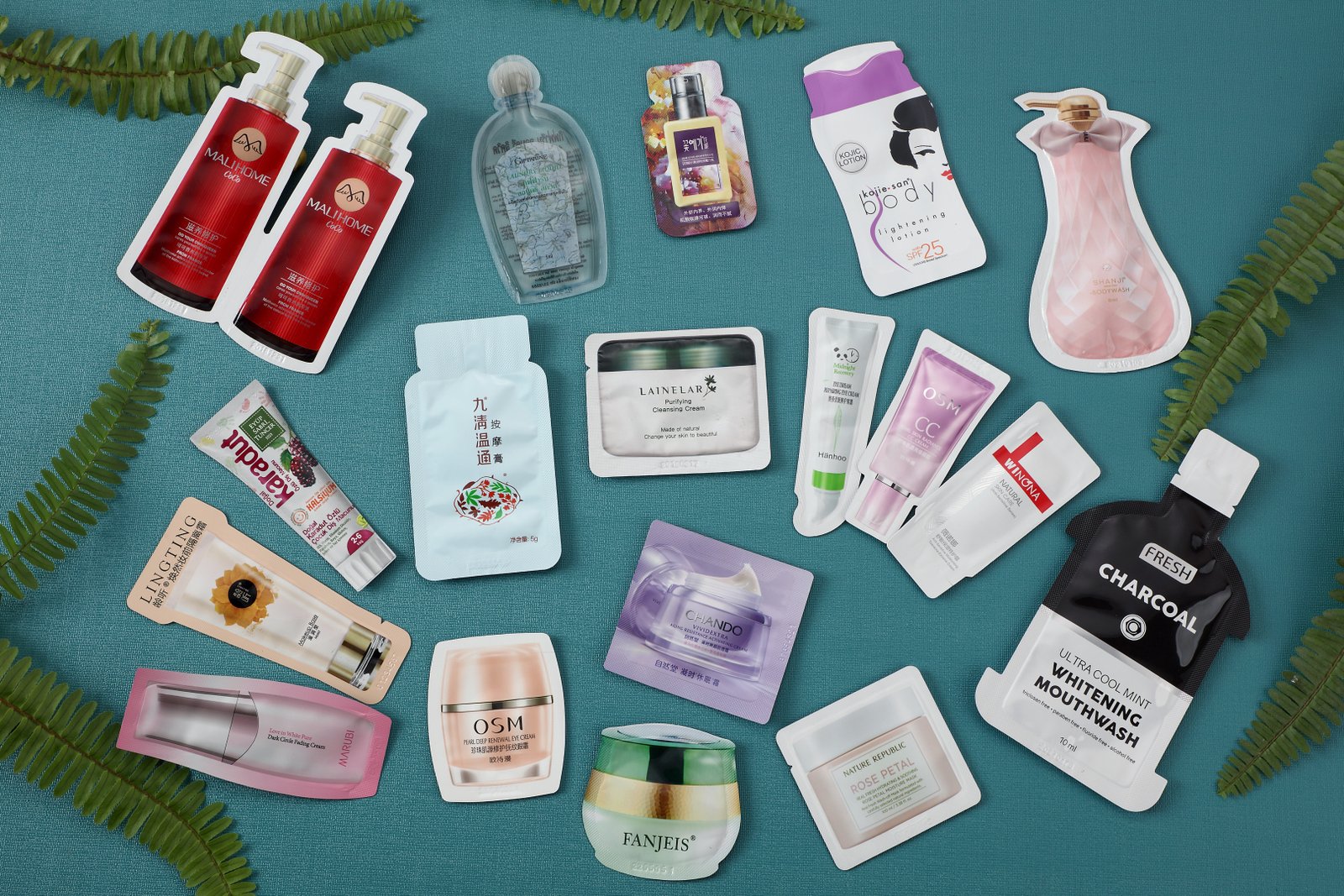
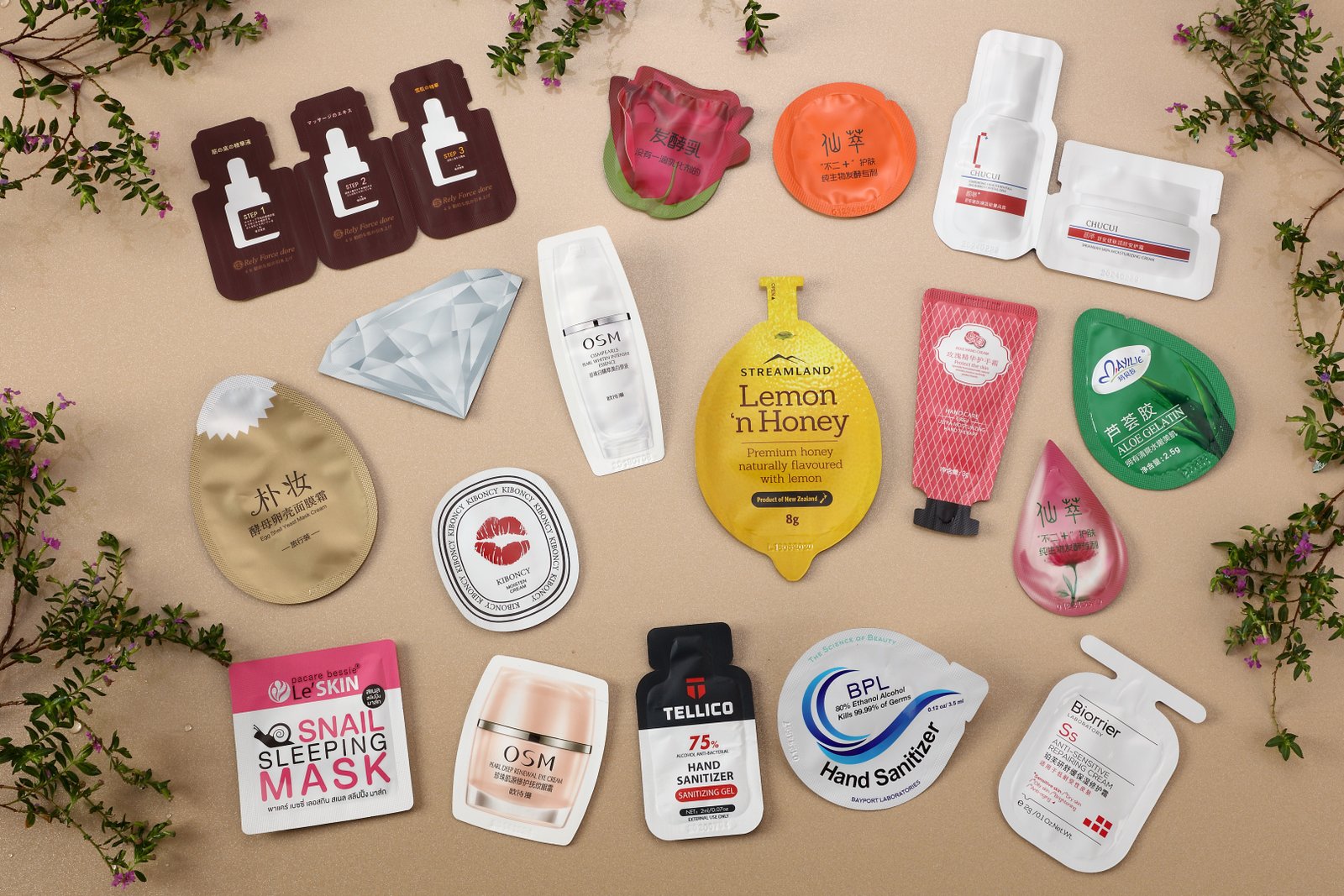
Dachuan Packaging’s shaped-sachet catalog shows several outlines used to discuss cosmetic presentation. Use those photographs to explain the design direction while keeping technical choices connected to the actual formula. The nine decisions below help a brand prepare a sampling brief that addresses filling, contact, opening, artwork and distribution. Approve the trial purpose before allowing the shape to define the product quantity.
1. Cream Sample Packaging Begins with the Trial Purpose
Define what the recipient is expected to do with the sample and which instructions describe that use. Ask the product team to set the intended quantity rather than choosing it to match a preferred packet. A small pack should still support the planned product experience.
Identify the formula and relevant conditions under which it will be filled and evaluated. A lotion, thick cream and another cosmetic preparation may present different flow and removal questions. Give the supplier useful product information and mark anything that still needs investigation. This makes the cream sample packaging discussion specific enough to guide construction and sampling without inventing a product-use claim.
2. Choose the Outline for a Reason
Explain whether a shaped packet should resemble a full-size container, express a product category or support a campaign identity. Keep that design goal distinct from the internal cavity and opening requirements. A recognizable silhouette must still work as a filled package.
Ask the supplier to review narrow areas, curves and the proposed seal path before final artwork is prepared. Show where contents are intended to sit and how they should leave the pack. Use a physical sample to explore the contour rather than approving it only as a flat graphic. The production drawing should identify the agreed outline and relevant dimensions clearly.
3. Assess Formula Contact and Storage
Share relevant formulation and storage requirements with the technical team and supplier. Request the proposed construction for evaluation with the intended product. Do not assume a visually similar cosmetic packet provides an interchangeable specification.
Agree which observations and documentation are relevant to suitability. Keep the formula version and sample reference connected in the evaluation record. A material described as premium does not by itself answer the contact question. Cream sample packaging should be assessed using evidence appropriate to the contents and intended conditions, with any proposed alternative construction identified before it is accepted as part of the final brief.
4. Match the Cavity to the Product
Allow for the product space after the outline, seals and other features are considered. The maximum outside width and height do not fully describe usable capacity, especially for a shaped packet. Ask the supplier to explain how the proposed cavity supports filling and removal.
Use the intended quantity and representative formulation in a practical sample. Observe where the product settles and whether some areas are difficult to empty. Keep the dimensions open to revision until those observations have been discussed. Recording the fill amount with the drawing helps ensure later cream sample packaging proposals are compared against the same product and use assumptions.
5. Select an Opening around Dispensing
Define whether the product should leave through a relatively small outlet, a broader tear or another agreed arrangement. Review the choice with the supplier and product team rather than selecting a notch from appearance alone. Different product consistencies may need different user actions.
Ask first-time users to open filled samples using the proposed instructions. Observe grip, tear initiation, control of product removal and handling of the remaining packet. Record specific difficulties so changes can address the right problem. The opening, outline and graphics should be refined together because changing one can affect the space or cues available for the other two.
6. Plan a Realistic Filling Trial
Clarify how the packets will be supplied, presented, filled and closed. Involve the filling partner before the construction and artwork are released. The proposed outline may create handling requirements that are not visible in a catalog image.
Document the product and conditions used in the trial. Observe the sealing area and agree relevant package checks with the responsible technical team. An empty shaped packet can help approve proportions, while a filled trial answers additional process questions. Cream sample packaging should be assessed as a complete product and process arrangement rather than as an isolated printed component approved by the marketing team alone.
7. Communicate Identity at Actual Size
Review the product name, variant, sample quantity and instructions at the size the recipient will hold. Keep essential information legible and clear of seals, cuts and folds on the supplier’s approved template. Have the responsible team approve wording and any claims.
A packet that resembles the full-size container should still make the sample format and quantity understandable. Avoid relying only on color to separate variants. Review each version after it is removed from its kit, carton or leaflet. Save the approved artwork revision with the corresponding construction so a structural change does not leave an outdated printing file in use.
8. Consider Distribution with the Sample
Explain whether the sample will be inserted into a product box, mailed, handed out or displayed as part of a set. Review the filled packet in that actual arrangement, including the way recipients will find the instructions. The loose packet is only one part of the sampling program.
Define counting, variant grouping and outer packing with the commercial team. Agree relevant handling checks for the proposed route. Cream sample packaging should not be described as successful because a concept image looks appealing; evaluate the practical preparation and delivery requirements. Keep the intended distribution scope explicit when quotations and sample stages are compared.
9. Release a Repeatable Sampling Brief
Collect the trial purpose, formula, quantity, drawing, material proposal, opening, artwork and evaluation decisions in one release record. Identify the people responsible for text, technical and commercial approval. Mark any point still awaiting supplier or filler input.
For future variants, compare changes with this baseline. A different formula or trial quantity may require another capacity and dispensing review even if the silhouette is unchanged. Keeping the cream sample packaging record specific makes it easier to discuss alternatives and repeat production without claiming that all small cosmetic packets share the same construction, filling requirements or user experience.
A practical planning example
Imagine an illustrative cosmetic program that wants a small packet to resemble a full-size jar. The initial drawing emphasizes that silhouette, while the product team has not yet confirmed the trial quantity. The useful next step is to agree the sample purpose and contents before treating the outline as final.
The supplier reviews the proposed internal cavity and opening, and the filler prepares relevant samples. Users then follow the intended instructions so the team can observe product removal. If the jar-shaped outline creates a difficult corner, the contour can be adjusted without losing the main visual idea. This scenario describes a design review, not a reported customer project or sales result.
Save the approved quantity, product version, sample reference and observations together. The record explains how the selected cream sample packaging supports the intended trial and identifies what should be reevaluated when the program adds a new formulation or variant.
Cream Sample Packaging decision record
| Record | What to identify | Decision to capture |
|---|---|---|
| Product | Contents, version and intended quantity | Requirements confirmed by the product team |
| Package | Drawing, construction and opening | Approved specification and sample reference |
| Process | Filling, closing and handling conditions | Relevant trials and unresolved questions |
| Release | Artwork, quantities and commercial scope | Named approvers and current revision |
Cream Sample Packaging FAQs
Can the sample quantity be selected from the packet shape?
Set the quantity around the intended product trial, then evaluate the outline and usable cavity against that requirement.
Does a cream sachet always dispense through a small opening?
No. Select and test an opening arrangement appropriate to the product consistency, use instructions and construction.
Should every formulation use the same sample construction?
Do not assume so. Review relevant contact, filling and dispensing requirements for the actual product before adopting an existing specification.
What should accompany a shaped sample request?
Provide the intended trial purpose, formula information, target quantity, visual concept, distribution plan and any known filling requirements.
Plan your next packaging discussion
Dachuan Packaging is based in Shantou, Guangdong, China. Share the product, intended format, fill amount, quantity and filling requirements through our packaging inquiry page. Include the decisions that still need supplier input so the team can discuss a relevant proposal and sampling route.
Continue with our related packaging planning guide, or browse the product catalog for visual references. For barcode planning, see GS1 Canada’s barcode guidance; for the role of seal-strength evaluation, see ASTM’s F88/F88M overview. Match external guidance to the actual application with the responsible technical team.