
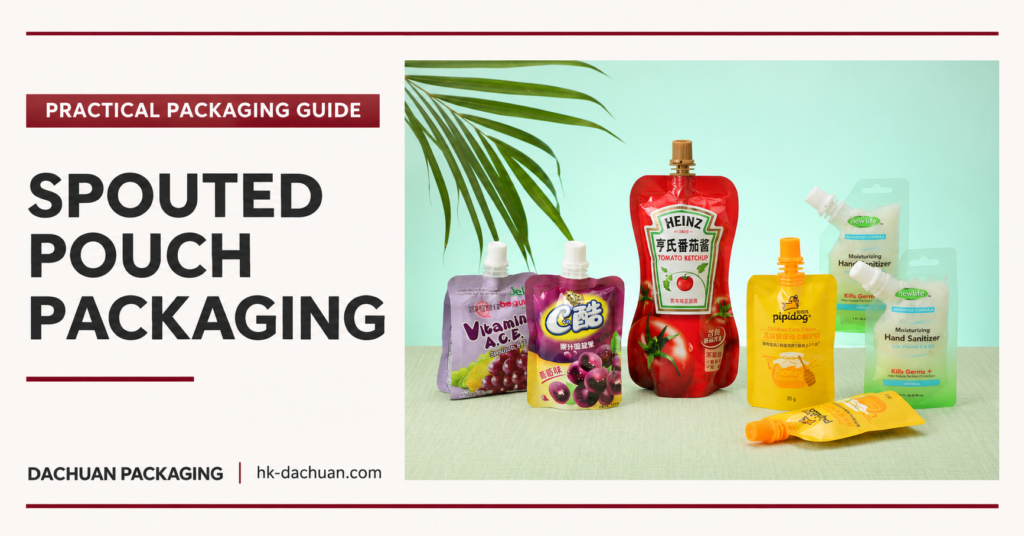
Spouted pouch packaging combines a flexible body with a specified dispensing and closure arrangement. The body, fitment, cap, contents and filling process need to work together. Select the system around the intended product and use rather than treating a familiar cap shape as proof of suitability.
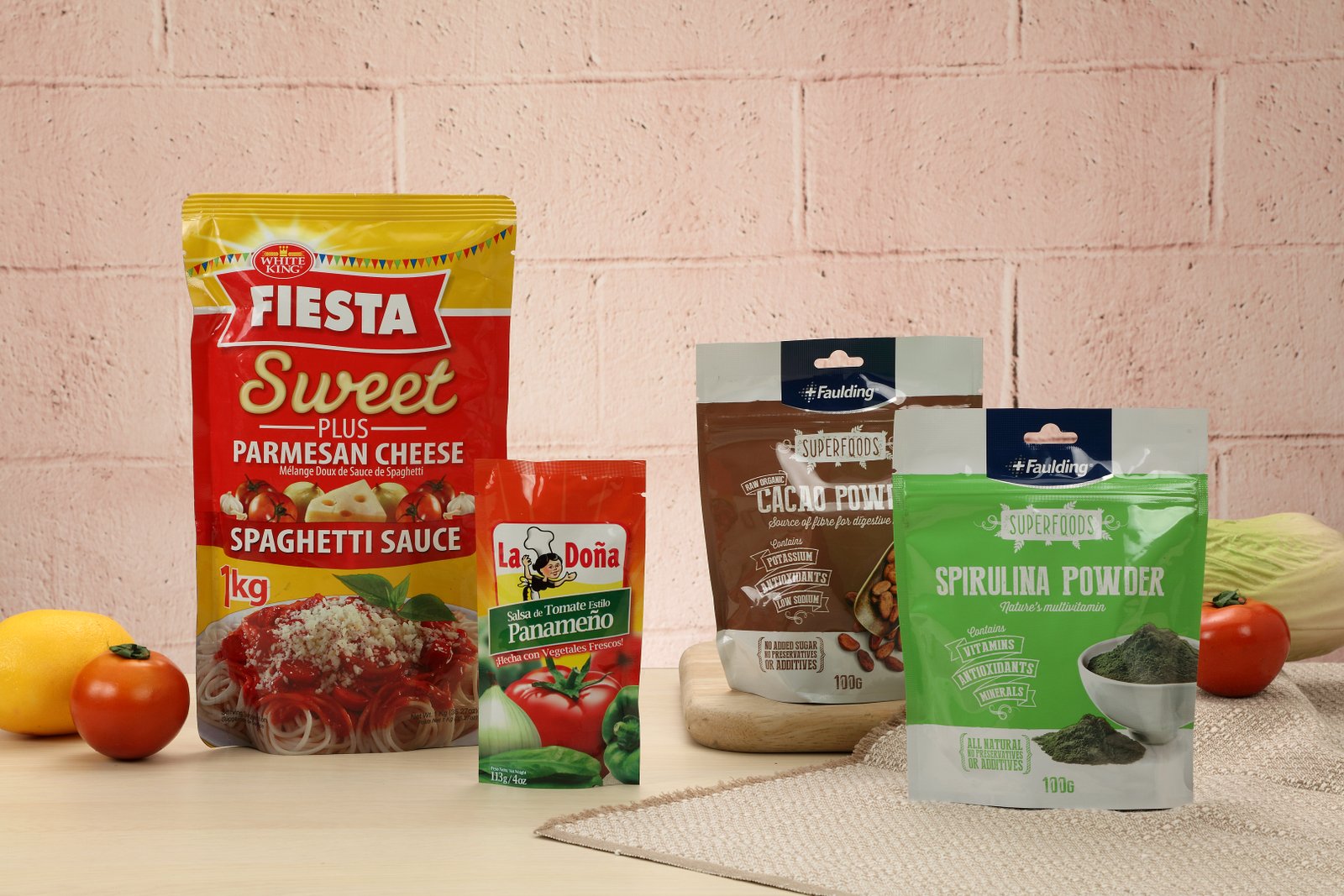
Dachuan Packaging’s catalog includes photographs of spouted packs alongside other pouch formats. These references show presentation possibilities, while a production discussion must establish the exact specification for the intended order. The nine checks in this guide cover the decisions that connect dispensing with filling, handling and approval. They apply as planning questions; the final requirements depend on the actual contents, process and market.

1. Spouted Pouch Packaging Begins with Product Flow
Describe the contents and how they should leave the pack. Include relevant consistency information, intended fill amount and the use occasion. A free-flowing liquid, thick paste and product with particulates may create different dispensing questions.
Ask the product and filling teams to identify the conditions that must be considered. Do not select the outlet only by looking at another product’s photograph. Evaluate the intended contents in a proposed sample and observe what happens at the start and end of dispensing. Spouted pouch packaging works best as a connected system specification, with the product behavior and user action documented alongside the body and fitment details.
2. Define the Dispensing Task
Explain whether the pack is intended for pouring, controlled transfer, repeated access or another specific action. Identify any receiving container and the expected user position. The way a person supports the body can change the practical flow and handling.
Test the sequence using realistic samples rather than judging a cap in isolation. Observe opening, grip, positioning and product removal. If the pack will be used over several occasions, include the expected intermediate handling in the review. Keep the trial aligned with the product instructions so that the chosen dispensing arrangement supports the actual task rather than an easier substitute demonstration.
3. Confirm Fitment and Closure Details
Ask the supplier to identify the proposed fitment, cap and body interface. Record the specification and relevant dimensions instead of describing the assembly only by color. Confirm which components are included in the quotation and which operations the filling partner performs.
Review product-contact and functional requirements for the complete assembly. A body material assessment does not automatically cover every selected component. Where a different cap or fitment is proposed, keep that alternative visible as a separate sample or revision. This makes spouted pouch packaging easier to compare across offers and prevents a similar external appearance from hiding a change that needs technical evaluation.
4. Agree the Fitment Position
Discuss where the outlet sits on the finished pack and how that position relates to filling, grip and dispensing. A corner arrangement and a different position may produce different handling requirements. Use the actual construction drawing to confirm orientation and dimensions.
Evaluate the position with the target fill amount. Check whether the user can support the pouch while operating the closure and whether the pack behaves as intended as contents are removed. Ask the filling partner to review the same arrangement. An outlet that appears convenient in a loose sample may still require a different presentation or handling method on the intended line.
5. Plan Filling and Final Closure
Clarify the filling route and the operations expected before the finished pack is released. Confirm which parts arrive assembled, how contents enter the pack and how final closure is controlled. Involve the equipment operator before finalizing the purchasing specification.
Use a trial that represents the proposed construction and intended process. Record sample preparation, product version and relevant settings so observations can be interpreted later. Review the filled body, fitment interface and closure as part of the same system. Spouted pouch packaging should not be approved solely because one component performs well in an isolated demonstration under conditions that differ from the planned filling operation.
6. Evaluate Grip and Pack Shape
Fill the proposed sample to its intended amount and observe how it stands, flexes and is held. Check the handling during opening and dispensing rather than using only an upright display photograph. The usable grip area may change as the product leaves the pack.
Ask first-time users to follow the proposed instructions and collect specific observations. Note any need to support a different part of the pouch or reposition the receiving container. Review those findings with the packaging team before making dimensional changes. A fuller or flatter shape is not automatically better; its usefulness depends on the product and the task established in the original brief.
7. Choose Checks for the Complete Assembly
Agree which visual, mechanical, leakage and handling evaluations are appropriate to the application. Ask the responsible technical team to define sample conditions and acceptance criteria. Different checks answer different questions, so keep their purpose clear in the approval plan.
Inspect the filled assembly after relevant conditioning rather than limiting the review to freshly made samples. Keep the body and closure references traceable in the test record. Where a problem appears, investigate filling, sealing, component selection and handling together. Spouted pouch packaging can have several interfaces; one successful observation should not be used as a universal statement about every possible failure path or use condition.
8. Place Instructions Where They Remain Useful
Design the front panel and instructions around the approved orientation. Check how the user holds the pack and whether a hand or fold hides important information. Allow for production coding where the process requires it, and keep the printed layout clear of cuts and seals.
Review the label text with the responsible product team and evaluate the file at actual size. If variants share a body or fitment, make their identities clear without relying on the cap color alone. Keep the supplier’s production template as the artwork baseline. A structural change may require an artwork review even when the brand wants to preserve a familiar front-panel appearance.
9. Save the Approved System for Reorders
Release a record covering the body, fitment, closure, dimensions, contents, filling arrangement, artwork and agreed checks. Identify which components and operations the supplier’s quotation includes. This gives purchasing and production one common reference.
For a reorder, compare the request with the approved system and record any changes explicitly. A new formula, component source or filling route can affect the evaluation required. Ask the supplier to flag proposed substitutions before production rather than after delivery. A clear spouted pouch packaging specification makes those discussions manageable and supports repeatability without promising that a visually similar pack will always behave in the same way.
A practical planning example
Imagine an illustrative sampling brief for a viscous personal-care product. The brand likes a small spouted catalog pack, but the filling route and dispensing task have not been confirmed. The supplier first needs the intended contents, fill amount and use instructions before proposing the body and fitment combination.
The team evaluates the sample as a complete assembly: opening the cap, supporting the pouch, removing product and handling any remainder. The filler separately confirms access and closure operations. If an alternative fitment is proposed, it is documented as a new option instead of being treated as an invisible equivalent. This is an example of a review process, not a documented project result.
Keep the sample identifier, drawing, component references and product version with the approval. Those details give the next spouted pouch packaging order a clear baseline and help identify which checks should be revisited when the formula, component or dispensing instructions change.
Spouted Pouch Packaging decision record
| Record | What to identify | Decision to capture |
|---|---|---|
| Product | Contents, version and intended quantity | Requirements confirmed by the product team |
| Package | Drawing, construction and opening | Approved specification and sample reference |
| Process | Filling, closing and handling conditions | Relevant trials and unresolved questions |
| Release | Artwork, quantities and commercial scope | Named approvers and current revision |
Spouted Pouch Packaging FAQs
Can the cap be selected independently of the pouch?
The body, fitment, closure, contents and process should be reviewed together. Confirm the proposed component specifications and evaluate the complete assembly.
Does every spouted pouch have the same filling route?
No. Agree the actual filling and final closure operations with the supplier and filling partner before releasing the construction.
Can I approve dispensing with water instead of the product?
A substitute may help an early demonstration, but it does not establish behavior for the intended contents. Plan relevant filled trials with the responsible technical team.
What matters when changing a fitment?
Document the proposed replacement and review contact, interface, filling, closure and user handling requirements rather than judging equivalence by appearance.
Plan your next packaging discussion
Dachuan Packaging is based in Shantou, Guangdong, China. Share the product, intended format, fill amount, quantity and filling requirements through our packaging inquiry page. Include the decisions that still need supplier input so the team can discuss a relevant proposal and sampling route.
Continue with our related packaging planning guide, or browse the product catalog for visual references. For barcode planning, see GS1 Canada’s barcode guidance; for the role of seal-strength evaluation, see ASTM’s F88/F88M overview. Match external guidance to the actual application with the responsible technical team.