
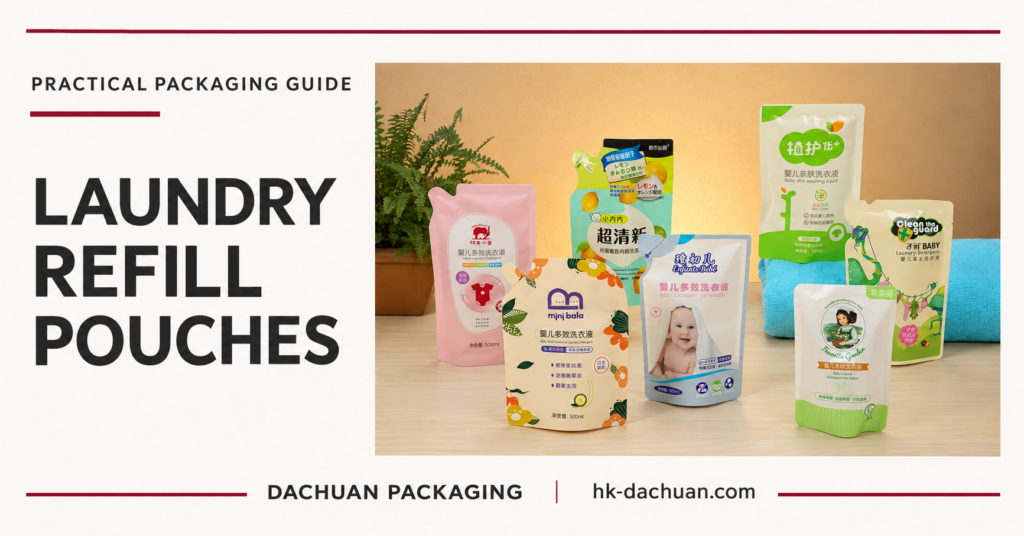
Laundry refill pouches should be developed around the detergent formula, receiving bottle and transfer experience. A standing format may provide a useful presentation, but that shape alone does not establish liquid compatibility, usable capacity or handling performance. Start with the product and its journey before selecting the final outline.
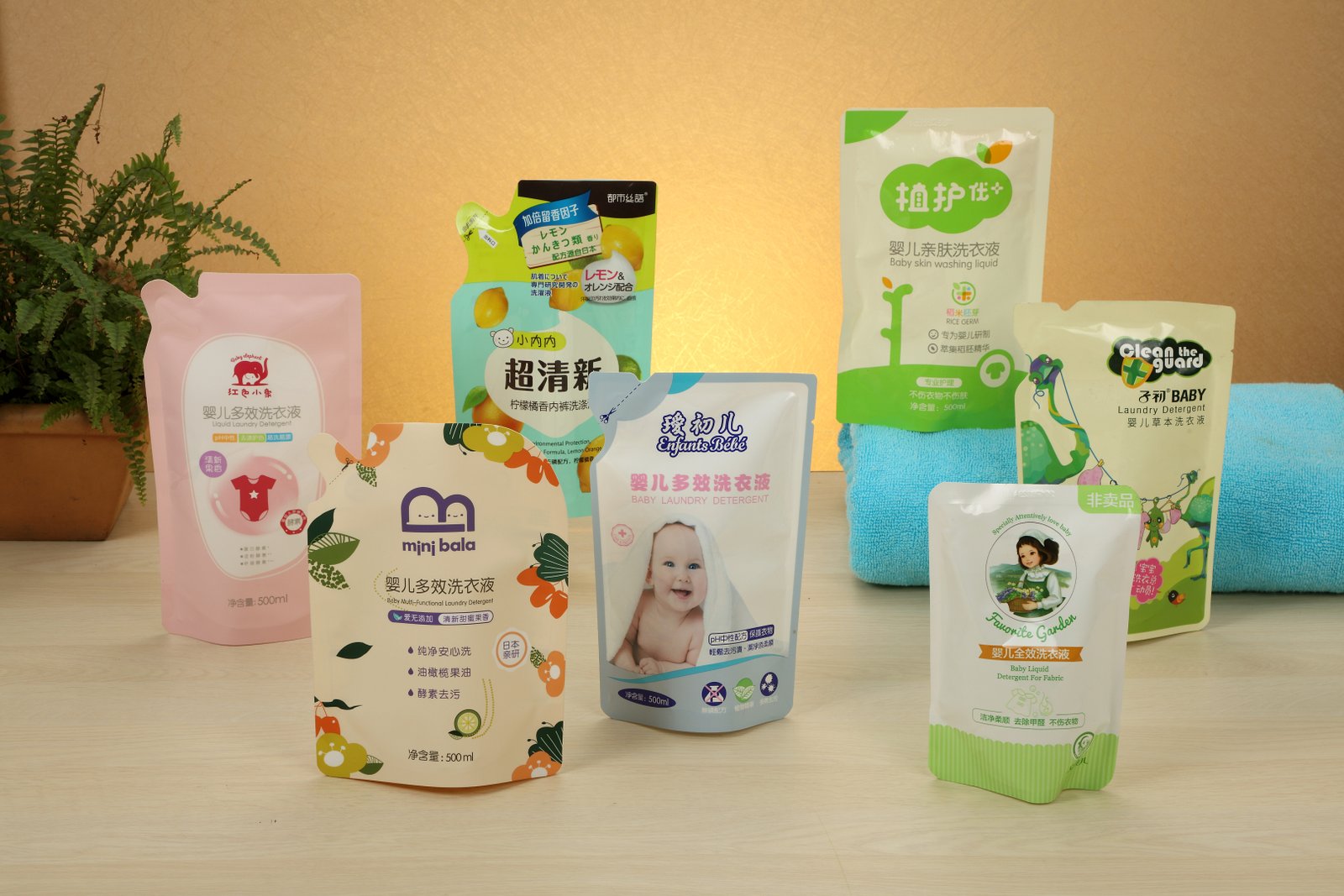
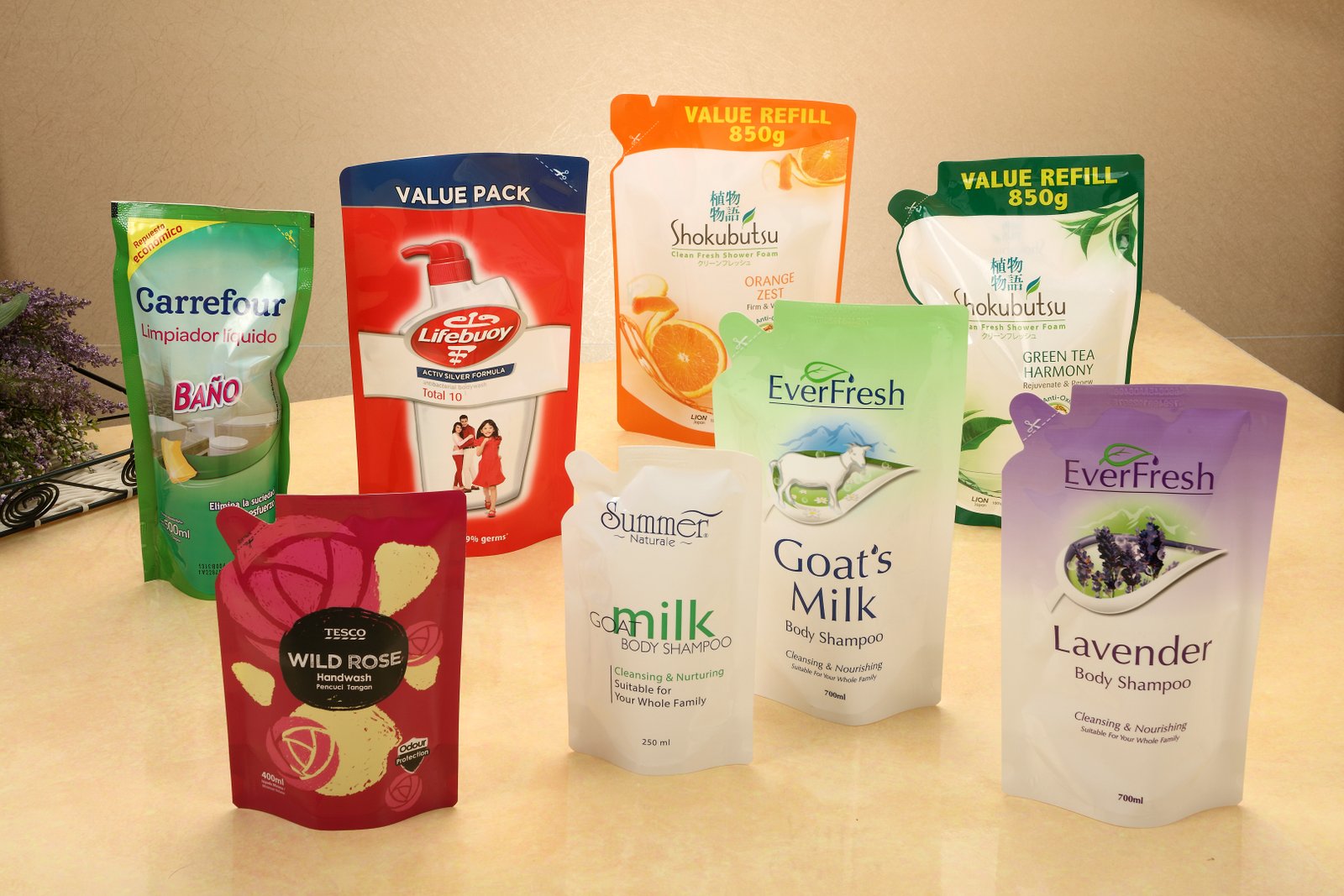
The Dachuan Packaging catalog includes household refill-style examples in several dimensions and printed layouts. They can help communicate the presentation you want. Use this guide to turn that visual reference into nine specific discussions with the packaging supplier and filling partner. The resulting brief should make opening, transfer, storage, shipping and production responsibilities clear enough to evaluate on a filled sample.
1. Laundry Refill Pouches Begin with the Formula
Identify the detergent formulation and the relevant contact requirements with the team responsible for the product. Supply useful information about consistency, filling conditions and intended storage. Avoid selecting a material only because another household pouch looks similar.
Ask for the complete proposed pouch and closure specification. The formula assessment should cover the parts that contact the product and the conditions expected in use. Where the formulation is changing, keep the version identifiable in the trial record. Laundry refill pouches for two related products may still need separate evaluations; shared artwork or a common front-panel size does not settle their compatibility requirements.
2. Specify the Receiving Container
Explain which bottle or container will be refilled and how the user is expected to position it. Record its opening, target refill quantity and any features that affect transfer. A wide-mouth evaluation vessel may make a concept appear easier to use than the actual consumer bottle.
Use the real receiving container in the sample trial. Observe whether a user can hold it securely while controlling the pouch and whether the transfer sequence is obvious. A change to the receiving bottle can alter the application even when the pouch is unchanged. Keep a bottle reference or drawing with the packaging brief so that the teams are discussing the same refill system.
3. Allow for Capacity and Handling Space
Distinguish the declared product amount from the usable capacity needed during filling and handling. Ask the supplier to show the dimensions and seal areas clearly, including any bottom gusset or selected dispensing feature. Confirm the measurement convention before comparing quotations.
Fill samples to the intended quantity and inspect their shape, standing behavior and grip. A pack that looks spacious when empty may become difficult to hold at its actual fill. The best dimension choice balances product accommodation with the intended handling experience. Record the filled sample weight and observations alongside the drawing. These details help future laundry refill pouches stay consistent with the approved use case.
4. Choose an Opening for Controlled Transfer
Discuss whether the use calls for a tear-open format, a selected fitment or another confirmed arrangement. The decision should consider product flow, the receiving bottle, repeated use and filling equipment. Do not assume that a catalog photo establishes the exact opening construction available for your order.
Evaluate how the user initiates the opening and controls the first movement of the contents. Observe any need to squeeze, support or reposition the pouch. If the product is meant to be transferred in one session, make that sequence clear. If some contents remain, agree the required closure and storage behavior separately rather than treating reclosure as a complete performance approval.
5. Plan Filling and Final Sealing Together
Involve the filling partner early enough to review how packs are presented, held, filled and closed. Share the proposed dimensions and opening arrangement before production artwork is finalized. Confirm any relevant machine constraints with the people who will run the line.
During trials, document product near the sealing area and the conditions used for closure. Review visual observations alongside the agreed leakage and mechanical checks. A sample made under an unknown process can be useful for appearance, but it gives a weaker basis for approving the intended filling operation. Keep the sample preparation method and equipment reference in the evaluation record for laundry refill pouches.
6. Evaluate Grip and Emptying
Ask users to complete the transfer with realistic product and fill conditions. Watch where they grip the pack, whether their hands cover important instructions and how they manage the final portion of the contents. The ability to stand on a table is only one part of the use experience.
Collect specific observations instead of a general comment such as “easy to use.” Note where the transfer stops, whether additional squeezing is needed and which part of the opening causes difficulty. Use those findings to discuss dimensions, opening and graphic changes with the supplier. Keep the conclusions tied to the tested sample rather than applying them to every pouch that shares a similar appearance.
7. Keep Product and Refill Identity Clear
Make the product name and intended refill use understandable at a glance. The artwork needs to identify the contents without relying on the receiving bottle being nearby. Review any instructions and required warnings with the responsible product team before releasing the file.
Check the design at actual printed size on the approved dieline. Keep essential information clear of cuts, seals and folds, and allow for batch or date coding where the production process requires it. For a range of fragrances or formulations, compare the variants side by side. The design should support distinction after the packs are separated from shipping cartons and retail displays.
8. Review Shipping and Outer Packing
Describe how the filled packs will be counted, packed, handled and shipped. Agree an outer packing arrangement that suits the intended route. Review how the pouches sit together and which surfaces or features may contact neighboring packs during movement.
Select handling and transport evaluations with the responsible technical team. The right plan depends on the filled package and route rather than the word “refill.” Where a trial reveals a problem, record the condition and investigate the complete system, including filling and secondary packing. Laundry refill pouches should be released against a documented set of observations and criteria instead of an assumed universal transport performance.
9. Approve the Complete Refill System
Combine the formula reference, receiving bottle, dimensions, material proposal, opening and approved artwork into one revision-controlled package. Include the agreed trial and commercial assumptions. Confirm who signs off the product contact assessment, filling process and consumer instructions.
For repeat production, review changes against that baseline. A new detergent consistency, bottle neck or filling setup may require further checks even if the artwork remains familiar. Environmental statements also need their own support: a refill use does not by itself demonstrate recyclability or a measured reduction. Keep the specification factual so the team can discuss the actual construction and intended market without adding unsupported claims.
A practical planning example
Imagine a brand developing a refill for an existing laundry bottle. The initial concept uses a wide pouch opening, while the receiving bottle has a relatively narrow neck. A useful trial places both components in front of a first-time user with the intended product; it does not substitute an open beaker for the bottle.
The team records how the user opens the pack, finds a grip and completes the transfer. If the first design is difficult to control, opening and dimensions can be revisited before the printing file is approved. The supplier and filler can then repeat the relevant checks on the revised sample. This is an illustrative planning scenario rather than a reported customer result.
Save the tested bottle reference, pouch drawing, formula version and observations together. Those records let the buyer explain why the selected laundry refill pouches were approved and what must be reviewed if the receiving bottle or contents change later.
Laundry Refill Pouches decision record
| Record | What to identify | Decision to capture |
|---|---|---|
| Product | Contents, version and intended quantity | Requirements confirmed by the product team |
| Package | Drawing, construction and opening | Approved specification and sample reference |
| Process | Filling, closing and handling conditions | Relevant trials and unresolved questions |
| Release | Artwork, quantities and commercial scope | Named approvers and current revision |
Laundry Refill Pouches FAQs
Does a refill pouch always require a spout?
No. The opening should follow the formula, receiving container, filling arrangement and intended use sequence. Compare suitable options using filled samples and the actual bottle.
Can the same pack be used for every detergent variant?
Only after confirming the relevant formulation and performance requirements. Shared branding does not establish that all variants behave the same way in contact and filling.
Does a standing base prove the pouch will pour well?
No. Standing behavior and transfer control are different questions. Evaluate grip, opening and flow with the intended contents at the target fill amount.
What should be included in refill sample approval?
Include the formula, receiving bottle, material and dimensions, opening, filling conditions, artwork and agreed handling checks. Keep the approved revision identifiable for repeat orders.
Plan your next packaging discussion
Dachuan Packaging is based in Shantou, Guangdong, China. Share the product, intended format, fill amount, quantity and filling requirements through our packaging inquiry page. Include the decisions that still need supplier input so the team can discuss a relevant proposal and sampling route.
Continue with our related packaging planning guide, or browse the product catalog for visual references. For barcode planning, see GS1 Canada’s barcode guidance; for the role of seal-strength evaluation, see ASTM’s F88/F88M overview. Match external guidance to the actual application with the responsible technical team.