
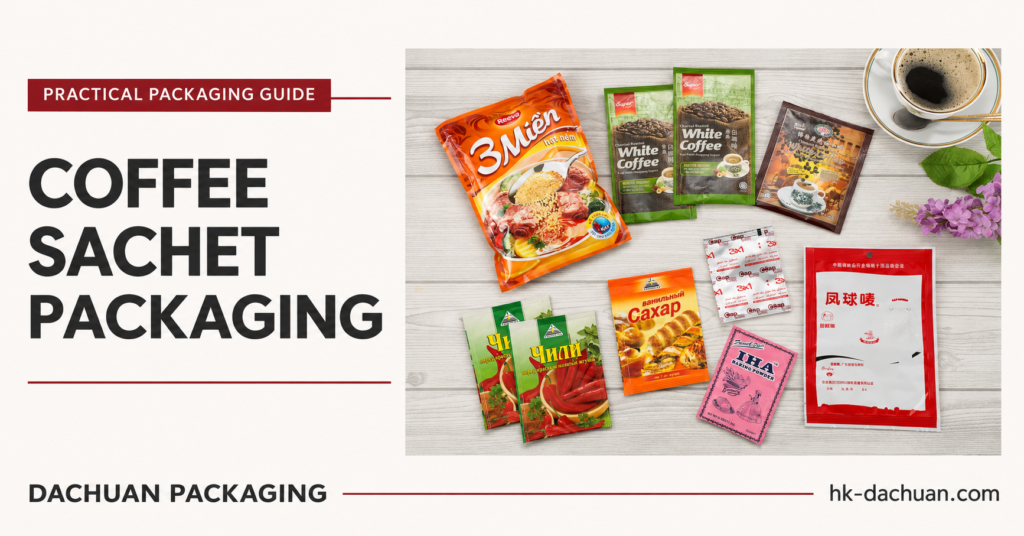
Coffee sachet packaging brings the product portion, filling process and opening experience into one small format. The best starting point is the coffee formulation and its intended use, rather than a packet dimension copied from another brand. Define what the consumer should prepare, then translate that use into a measurable packaging brief.
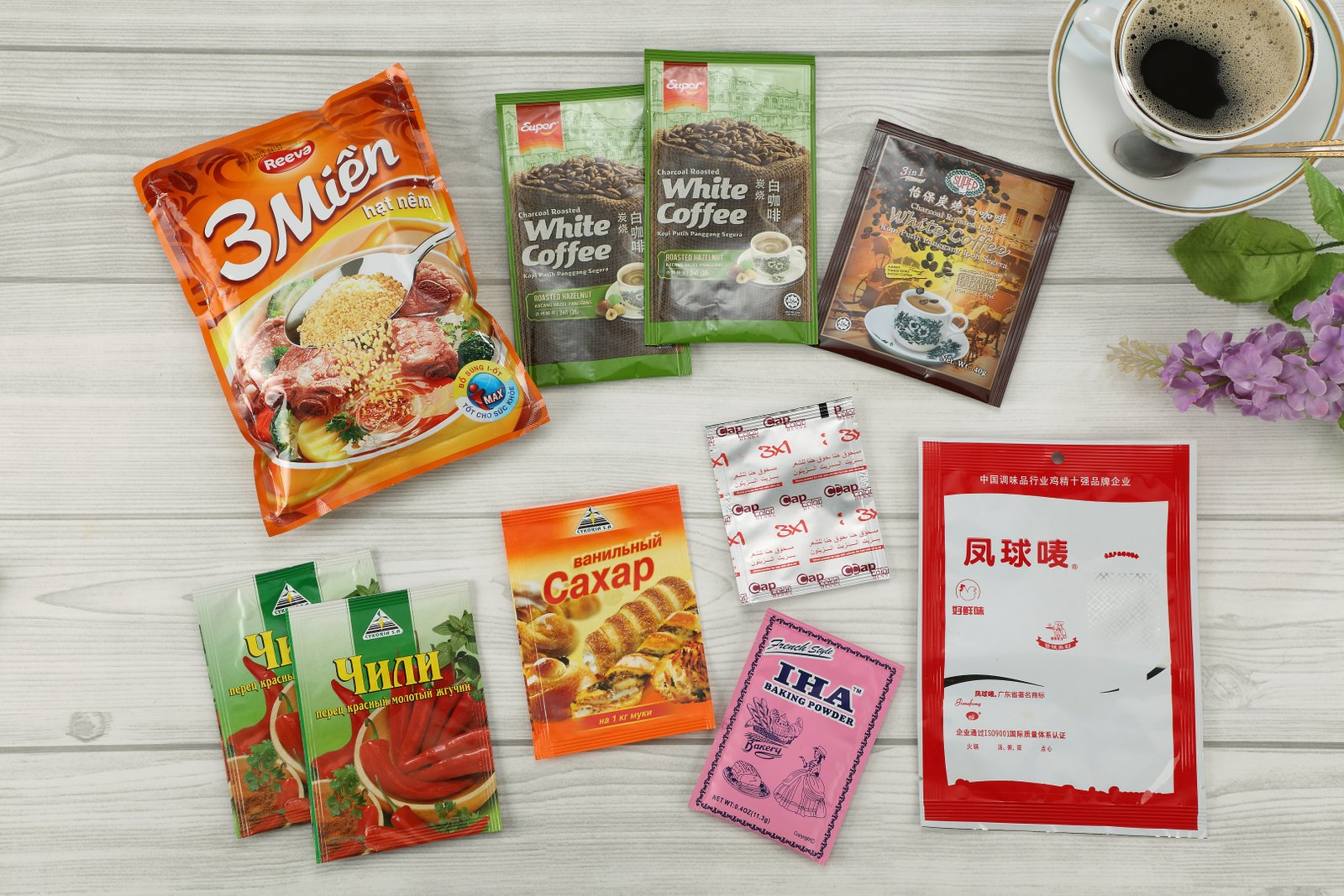
A soluble coffee mix, flavored powder and another coffee product may look similar on a shelf but need different handling. This guide focuses on planning powder sachets and portion packs; the catalog images provide visual references rather than specifications for every pictured product. Use the nine decisions below to bring purchasing, filling, product development and artwork approval together.
1. Coffee Sachet Packaging Starts with the Serving
Decide whether a sachet represents one cup, one preparation or another defined portion. Give the filling team the target product quantity and the tolerance they are expected to control. Record the preparation instructions separately from the packet size so the design does not accidentally define the serving. A brief that says only “small coffee bag” leaves too many decisions open.
Share a representative powder sample where practical. Products with different ingredient mixes can occupy different volumes at the same weight. Observe how the material settles and flows, then confirm the working space required during filling. This links the proposed coffee sachet packaging to the actual product rather than an attractive photograph.
2. Translate Fill Weight into Usable Space
Finished pack width and height include areas that do not hold product. Ask the supplier to identify the intended seal widths and any opening area on a dimensioned drawing. Confirm whether dimensions describe the finished packet or a film layout before comparing offers.
Fill an agreed sample with the target product and review headspace, handling and the ability to close the pack consistently. Leave the final size open until that practical review has been completed. An empty packet can illustrate proportions, but it cannot demonstrate usable capacity. Record the approved fill amount alongside the sample dimensions so both remain connected when artwork or quantities change.
3. Define Aroma and Storage Requirements
Describe the expected storage and distribution conditions and the product team’s concerns about moisture, oxygen, light and aroma. Ask for a proposed construction with relevant performance information. A material described simply as “high barrier” is difficult to compare without knowing what was measured and under which conditions.
Do not identify a layer structure from the packet’s color or metallic appearance. Request the actual specification and agree how suitability will be assessed with the intended contents. Coffee sachet packaging should be evaluated as part of the product’s storage plan. The packaging proposal is one input to that plan, while any shelf-life statement needs its own supporting product evidence.
4. Match the Supply Format to the Filling Line
Clarify whether the filler needs pre-made packets or roll material for an agreed form-fill-seal process. Involve the filling partner before committing to the specification. For roll supply, discuss the machine’s web, repeat, unwind and registration requirements; for pre-made packs, discuss opening, gripping and final closure.
A different supply route changes who performs forming and sealing operations. It may also change artwork setup and trial arrangements. Compare these responsibilities explicitly instead of assuming that a reel and a box of packets represent the same purchasing scope. Use our linked format guide when preparing the equipment information, and request a trial using the proposed material rather than an unrelated sample.
5. Keep Powder Away from the Seal Zone
Ask the filling team how they intend to control the product path and maintain a suitable sealing area. Powder present at the seal is a process observation that should be recorded during trials. Inspect the conditions around filling as well as the finished packet.
Agree which visual, mechanical and leak checks the application needs. A neat seal appearance does not answer every performance question, and one generic strength number should not replace an application-specific acceptance plan. Keep the sample, product and equipment settings traceable in the trial record. That evidence makes it easier to distinguish a material question from a filling or sealing setup issue when reviewing coffee sachet packaging.
6. Design a Controlled Pouring Experience
Review how the consumer will grip the packet, begin the tear and pour the contents into the intended cup or vessel. A small notch on a drawing is only the start of that assessment. Test the full opening sequence with filled samples and clear instructions.
Observe whether the opening creates an appropriate pouring path and whether product is left in areas that are difficult to empty. Ask first-time users to follow the proposed instructions instead of explaining the method in advance. Their observations can inform the notch location, tear direction and graphics. Keep any resulting change linked to the same drawing revision used by the converter and filling partner.
7. Use Artwork to Identify the Right Product
Prioritize the product identity, variant, portion and preparation sequence. Check the layout at actual printed size and keep critical copy clear of seals, folds and cutting areas. Provide the designer with the approved template rather than adapting artwork from a similar-looking packet.
Agree the location of batch or date coding with the filler so that variable information remains legible after production. If several coffee variants share a layout, review their names and distinguishing graphics as a set. A consistent range should still make each variant identifiable. Keep barcode requirements and print verification separate from whether a code happens to scan from a screen image.
8. Evaluate the Distribution Unit
Decide whether sachets will be supplied loose, in retail cartons, in food-service packs or as samples within another product. The outer arrangement affects counting, protection and the way consumers find instructions. Evaluate the packet in that context rather than approving only a loose sample.
Discuss the handling conditions expected before opening and agree relevant checks with the responsible teams. When several variants are packed together, confirm how they are counted and identified. Coffee sachet packaging is easier to manage when the individual packet specification and the outer packing instruction use consistent names and revisions. Record the quantity basis used in quotations so pieces, cartons and other units are not confused.
9. Release One Agreed Specification
Bring together the approved product portion, material proposal, finished dimensions, opening feature, artwork and acceptance plan. Mark the sample and the released documents with an identifiable revision. Assign responsibility for technical, commercial and text approvals before the purchase order is released.
For repeat orders, compare the new request with that approved baseline. A different formula, filling line or serving size may require another review even if the front artwork is unchanged. Ask the supplier to identify assumptions and unresolved points in writing. A clear coffee sachet packaging brief gives the team a practical way to discuss alternatives without promising a particular shelf life, saving or production result in advance.
A practical planning example
Consider an illustrative instant-coffee sampling brief. The brand has selected a target portion but has not confirmed packet dimensions. The appropriate next step is to share the product and intended preparation, obtain a dimensioned proposal and arrange a fill trial. Selecting the smallest packet from a catalog would reverse that sequence.
During the trial, the team can record usable fill space, seal-area condition, opening and pouring. If the powder settles differently from the first sample, the drawing can be revised before the artwork is released. The buyer then compares quotations against the same pack and order assumptions. This example describes a planning approach, not a reported customer project.
Keep a short decision record: product version, target quantity, sample reference, equipment, agreed observations, remaining questions and approver. That record is useful when coffee sachet packaging moves from the initial visual idea to a production discussion. It also creates a clear starting point for a future reorder.
Coffee Sachet Packaging decision record
| Record | What to identify | Decision to capture |
|---|---|---|
| Product | Contents, version and intended quantity | Requirements confirmed by the product team |
| Package | Drawing, construction and opening | Approved specification and sample reference |
| Process | Filling, closing and handling conditions | Relevant trials and unresolved questions |
| Release | Artwork, quantities and commercial scope | Named approvers and current revision |
Coffee Sachet Packaging FAQs
Can packet size be selected from fill weight alone?
Not reliably. Product volume, flow, headspace and the seal areas also matter. Evaluate the intended powder in an agreed sample before fixing the final dimensions.
Does every coffee sachet need the same material?
No. The required construction follows the product, storage expectations, protection needs and filling process. Request the proposed specification and the evidence relevant to your application.
Is a coffee sachet the same as a stick pack?
A stick pack describes a slim format. Confirm the actual packet shape, seam construction and supply arrangement rather than using the names as interchangeable technical specifications.
What should accompany a coffee packaging quotation request?
Include the product, target portion, approximate format, quantities by artwork, filling equipment and known material requirements. Mark points that still need a supplier proposal.
Plan your next packaging discussion
Dachuan Packaging is based in Shantou, Guangdong, China. Share the product, intended format, fill amount, quantity and filling requirements through our packaging inquiry page. Include the decisions that still need supplier input so the team can discuss a relevant proposal and sampling route.
Continue with our related packaging planning guide, or browse the product catalog for visual references. For barcode planning, see GS1 Canada’s barcode guidance; for the role of seal-strength evaluation, see ASTM’s F88/F88M overview. Match external guidance to the actual application with the responsible technical team.