

Packaging color approval needs an agreed reference, an identified proof or sample and a clear understanding of what that item represents. A screen preview can help discuss layout, but it does not by itself establish the appearance of a printed design on a selected packaging surface. Define the approval scope before asking reviewers to choose a color.
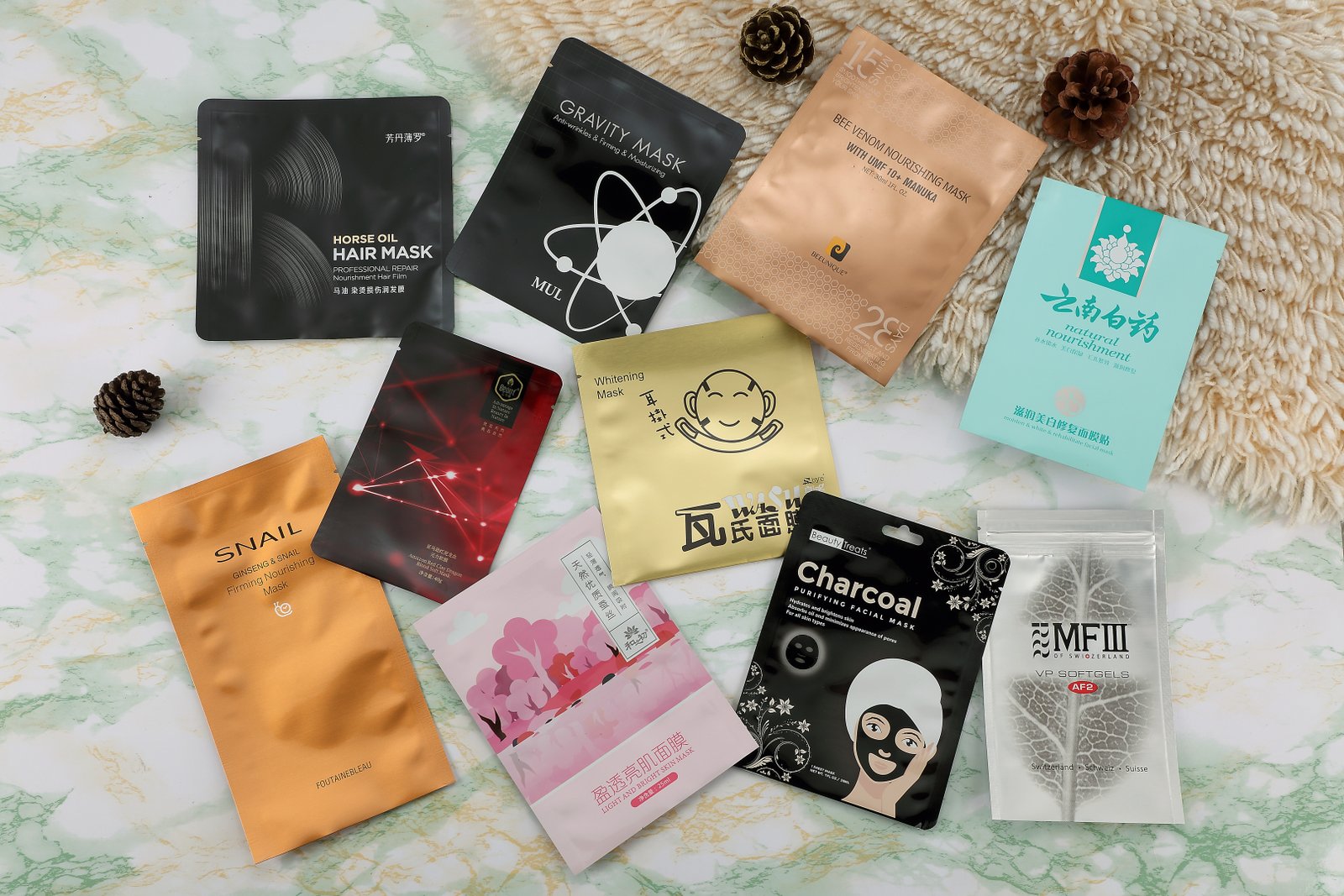
The product photographs in this guide show different cosmetic packet presentations from the Dachuan Packaging catalog. They are useful visual references, not calibrated print targets for another order. Use the nine steps below to connect brand expectations, the printer’s proposal and the final released files. Keep layout, color and surface decisions related while identifying which evidence supports each one.
1. Packaging Color Approval Starts with the Brand Reference
Identify the brand elements and colors that matter most to the project. Supply the available reference information and ask the printer how it should be used for the proposed process. A general request to match a website image leaves important questions open.
Distinguish a design direction from an agreed production target. If the brand is introducing a new look, record which decisions remain exploratory. Packaging color approval works better when the printer and brand team can identify the same reference rather than comparing different screens, photographs or samples without understanding how they were created.
2. Identify the Proposed Printing Surface
Confirm the material and finish associated with the print proposal. Ask how the selected surface will be represented in proofs and samples. A layout viewed on one surface should not automatically be treated as evidence for another construction.
Keep the substrate and relevant construction revision with the artwork record. If a material alternative is proposed, discuss whether the previous appearance reference remains suitable and what should be reviewed again. This is a specific question for the printer and brand team, rather than a reason to assume every metallic-looking, white or transparent surface will create the same finished appearance.
3. Agree What Each Proof Represents
Ask the printer to identify the purpose and limits of the proposed proof. A layout preview, a color reference and a sample of the finished construction may answer different questions. Label the items clearly so a reviewer does not approve a broader scope than the evidence supports.
Record which decisions can be made at each stage and which remain open. Fogra’s published information on proofing and prepress provides context for the distinction between reference printing conditions and an arbitrary image. Do not interpret a general reference as certification of a particular product or supplier. Keep the actual agreement for packaging color approval explicit in the project record.
4. Review Layout Independently of Color Preference
Check text, imagery, barcode areas, orientation and supplier-defined safe areas on the correct dieline. Complete that structural layout review without allowing an unresolved color preference to hide an incorrect file or obsolete template. Have the responsible product team approve the wording.
Evaluate the design at actual printed size and record the released artwork revision. If the dimensions or construction change, confirm whether the layout and proof stage need another review. Packaging color approval should connect to the correct file, not merely to a small preview whose appearance is appealing but whose content and dimensions have not been confirmed.

5. Make the Comparison Conditions Clear
Ask the printer and brand team how samples should be viewed and compared. Record the reference and conditions relevant to the agreed approval method. Avoid making a production decision from photographs taken under unrelated lighting and displayed on unreviewed screens.
Where measurements or tolerances are part of the agreement, have the responsible teams define the applicable method and criteria. Do not invent a universal numerical limit for every packaging job. Keep visual observations and measured information traceable to the sample. The purpose is a comparison that another reviewer can understand, rather than a claim that every observer will see an identical result in every environment.
6. Assess the Complete Graphic Hierarchy
Review the relationship between backgrounds, product names, imagery and essential information. A color change can affect how clearly a design communicates even when the text itself is unchanged. Evaluate the relevant finished sample and the design at actual size.
Check that important information remains identifiable across the intended range. Have the product team review required copy separately from brand preference decisions. Packaging color approval should not focus on one isolated swatch while overlooking how the whole panel works. Keep a record of the brand elements that are critical so a later review can concentrate on meaningful differences rather than treating every small variation as equally important.
7. Compare Variants as a Set
Place the relevant variants together during review and confirm that each remains distinguishable. A consistent family appearance should still support product identification. Do not rely on a color distinction alone where names or instructions are also needed.
Record which references apply across the range and which belong to a particular version. Keep artwork files and quantities identified by variant. If a new version is added later, compare it with the released set rather than reviewing it in isolation. This makes packaging color approval more useful for the commercial team while preserving a clear relationship between the selected appearance and the actual product identities.
8. Control the Final Sign-Off
Identify who approves layout, text, color reference and relevant surface appearance. Confirm what evidence is being accepted at the production release stage. Keep unresolved conditions visible instead of treating a casual response to an image as complete authorization.
Release one clearly identified file and record any accompanying sample or proof reference. Ask the printer to identify proposed changes before production. A controlled approval makes later questions easier to investigate because the team can identify what was supplied, reviewed and accepted. The record should distinguish an approved production target from an earlier concept that no longer represents the current order.
9. Keep a Usable Repeat Reference
Save the released artwork, material and finish information, relevant proof or sample identifiers and approval decision. Ask how retained samples should be stored and reviewed for repeat use. A sample separated from its reference information is a weaker basis for another order.
For repeats, identify changes in construction, printing process or artwork and agree what should be checked again. Packaging color approval is not a permanent conclusion attached to a brand name. It is an identifiable decision for a particular proposal, with records that help the brand and printer discuss later production without assuming an unexplained photograph guarantees the same result.
A practical planning example
Consider an illustrative packaging refresh in which the brand approves a layout on screen and later requests the same appearance on a different surface. The first approval can still be useful for the file’s content and hierarchy, but its color scope needs to be clarified before production.
The printer identifies a relevant proof or sample stage and explains what it represents. The brand team compares it with the agreed reference under the selected review conditions, then records the decision and file revision. If the surface changes again, the team knows which appearance assumptions need another discussion. This scenario explains an approval process, not a reported customer result or a guarantee of print matching.
Keep the reference, substrate, proof scope and named approver together. Those details make the next packaging color approval discussion more specific than a request to match an old photograph whose viewing and production conditions are unknown.
Packaging Color Approval decision record
| Record | What to identify | Decision to capture |
|---|---|---|
| Product | Contents, version and intended quantity | Requirements confirmed by the product team |
| Package | Drawing, construction and opening | Approved specification and sample reference |
| Process | Filling, closing and handling conditions | Relevant trials and unresolved questions |
| Release | Artwork, quantities and commercial scope | Named approvers and current revision |
Packaging Color Approval FAQs
Is a screen preview a complete printed color reference?
Not by itself. Agree what the preview represents and ask the printer which evidence is relevant to the selected material and production process.
Should color and layout be approved together?
Connect them to the same released file, while identifying which proof or sample supports the separate layout and appearance decisions.
Does one numerical tolerance apply to all packaging printing?
Do not assume so. The responsible teams should agree the relevant evaluation method, conditions and criteria for the specific proposal.
What should be retained for repeat print review?
Keep the approved artwork, material and finish references, relevant samples or proofs, review scope and decision record identifiable together.
Plan your next packaging discussion
Dachuan Packaging is based in Shantou, Guangdong, China. Share the product, intended format, fill amount, quantity and filling requirements through our packaging inquiry page. Include the decisions that still need supplier input so the team can discuss a relevant proposal and sampling route.
Continue with our related packaging planning guide, or browse the product catalog for visual references. For barcode planning, see GS1 Canada’s barcode guidance; for the role of seal-strength evaluation, see ASTM’s F88/F88M overview. Match external guidance to the actual application with the responsible technical team.