
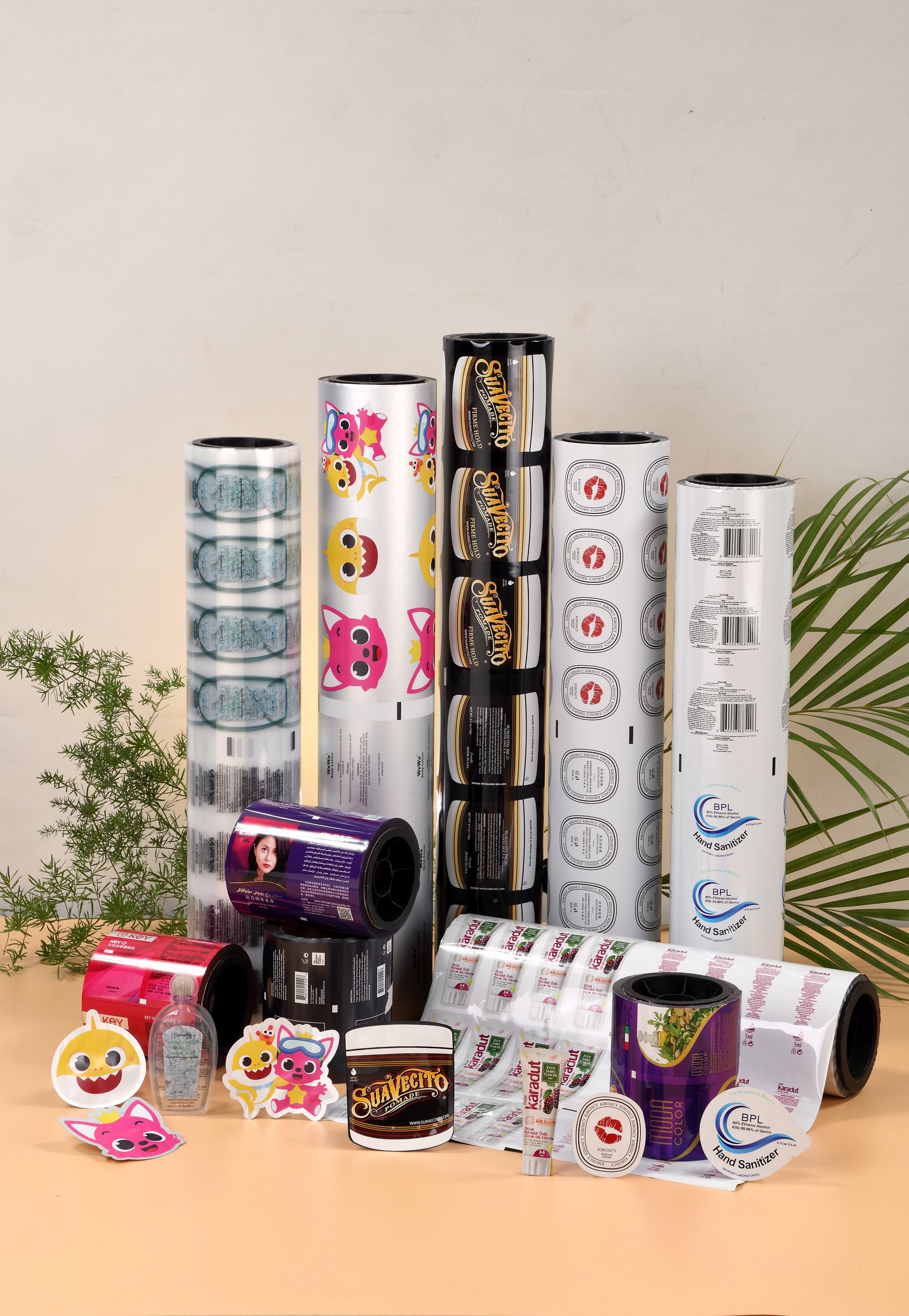
Roll film specifications connect a printed material to the process that will convert or use it. A reel photograph can communicate appearance, but it does not establish web width, print repeat, unwind direction or compatibility with a particular machine. Ask the intended operator to help define those requirements before ordering.
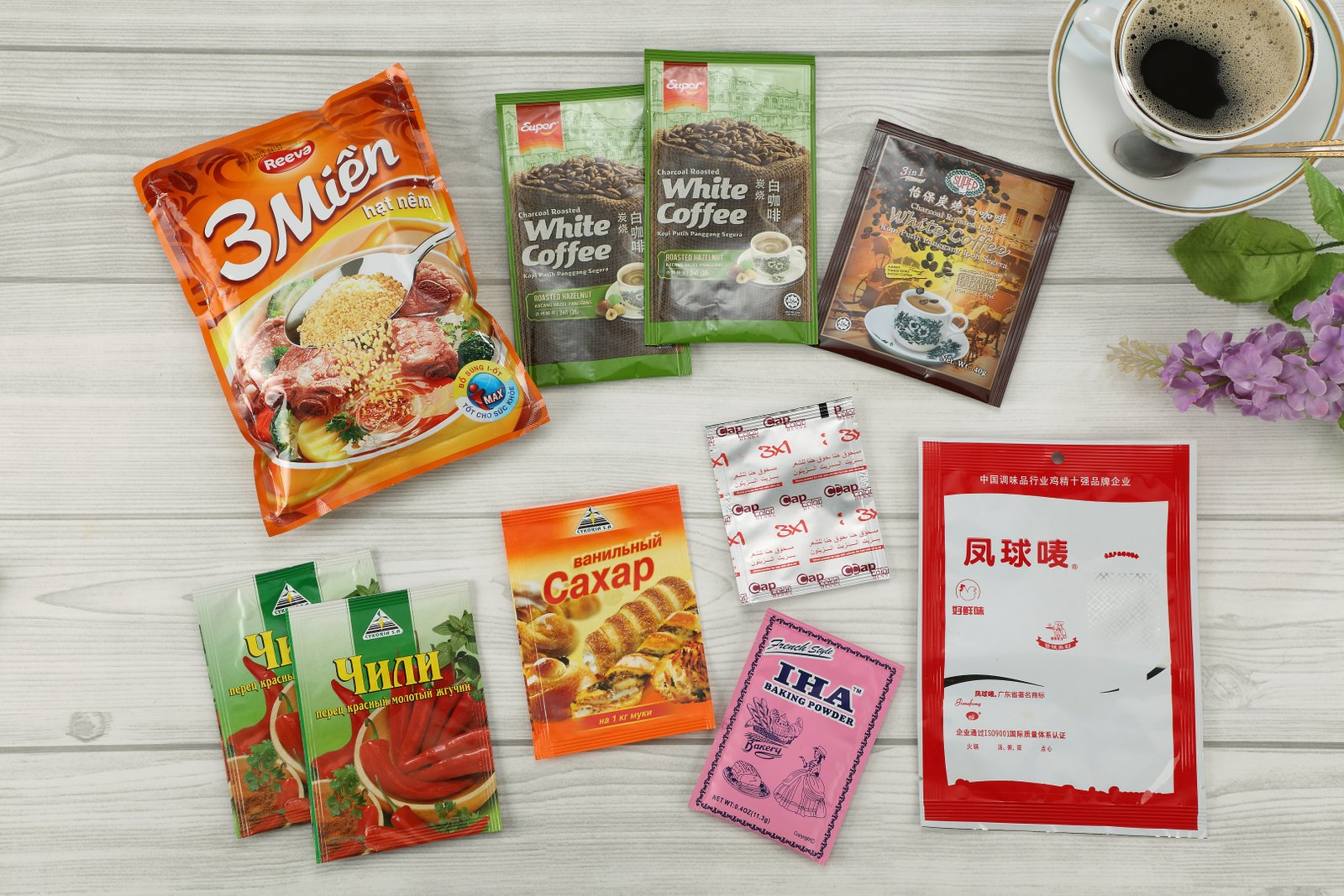
The Dachuan Packaging catalog includes printed reels and individual packet examples that illustrate different supply presentations. The final reel specification must follow the agreed process, which may differ between applications. Use the nine discussions below to align purchasing, prepress, the supplier and the filling or converting partner. Keep a dimensioned proposal and identifiable trial record alongside the artwork rather than treating a printed preview as a complete equipment brief.
1. Roll Film Specifications Begin with the Intended Process
Identify the equipment and operation that will use the reel. Explain which party forms the package, fills the product and makes the final closure where applicable. A printed reel may serve different processes, so avoid inferring its purpose solely from appearance.
Ask the operator which machine documents and material information are needed. Keep the equipment reference with the product and format brief. Roll film specifications should be based on the actual line and intended construction rather than copied from a reel used by another supplier or another product. Record unknown requirements early so the team can resolve them before artwork and commercial approvals advance.
2. Define Web Width and the Measurement Reference
Confirm the required web width with the operator and request a clear drawing. Identify relevant seal, trim and forming areas for the agreed process. The width of a finished packet is not automatically the same as the web width supplied on a reel.
Ask the supplier to state the measurement reference used in the quotation and sample proposal. If alternatives are discussed, keep their dimensions separate. A drawing is more useful than an unexplained number in a message. Compare the requirements against the intended machine documentation and confirm how the proposed sample will represent the final specification during a practical line trial.
3. Agree the Print Repeat
Discuss how the artwork repeats along the web and how that repeat relates to the package and machine cycle. Ask the operator and prepress team to review the layout together. Do not assume that scaling a front-panel image produces a usable repeat.
Keep the repeat drawing connected to the finished format and any registration arrangement. A change in pack length or layout may require more than a cosmetic artwork edit. Roll film specifications should identify the released repeat so the supplier and operator can distinguish it from an earlier concept. Record any assumptions that remain unresolved before the printed file is treated as production-ready.
4. Make Unwind Direction Unambiguous
Describe the required unwind using the operator’s agreed drawing or notation. Identify the printed side and the direction in which the design reaches the process. Words such as forward or reverse can be ambiguous without a reference diagram.
Review the proposal with both supplier and operator before release. A photograph of a reel may not reveal the orientation needed at the machine. Keep the approved unwind illustration with the specification and sample identifier. If a line or packing arrangement changes, confirm whether the previous direction remains appropriate rather than assuming a repeat order will be used in exactly the same way.
5. Confirm Reel and Core Requirements
Ask the operator to identify relevant core and reel dimensions, handling constraints and any other line-specific requirements. Have the supplier show how the proposed supply will meet that agreed brief. Avoid applying a universal reel limit to equipment that has not been identified.
Include the information needed for receiving, storage and loading. If the quotation uses film weight or another quantity basis, clarify the assumptions connecting it to the required output. Roll film specifications should make the commercial and operational units understandable. A reel count without the corresponding specification can be a misleading way to compare offers or plan production.
6. Review Registration and Coding Areas
Where registration marks or variable coding are relevant, ask the operator and prepress team to identify their required location and treatment. Keep those elements separate from decorative artwork decisions. Review the released template rather than adding them by guesswork to an existing image.
Check whether later edits to the artwork affect the agreed arrangement. Keep essential product copy and codes clear of the areas identified by the supplier. A screen preview can help review placement, while the intended process trial provides different evidence. Save the approved layout and equipment reference together so the next person can understand why the marks and clear areas are positioned as they are.
7. Connect Material Choice to the Line
Provide the relevant product and process conditions and request the proposed material construction. Ask the operator and technical team to review requirements related to forming, filling, sealing and handling as applicable. A good visual match is not evidence of process suitability.
Keep material information linked to the specific reel and trial. If an alternative is proposed, identify the change explicitly rather than treating it as an invisible equivalent. Roll film specifications should support a discussion about the complete application, including the contents and relevant package evaluation, without implying that a familiar printed surface establishes barrier performance or product-contact suitability.
8. Run a Traceable Process Trial
Agree what the trial must demonstrate and which sample represents the proposed specification. Record equipment, material, artwork revision and relevant operating conditions. Identify the observations and acceptance criteria with the responsible teams before judging the result.
Review registration, forming where applicable, filling, final seals and the finished format as relevant to the process. Record a specific problem and investigate it rather than labeling the whole trial good or bad without context. If the proposal changes, decide which checks need repeating. The trial record should explain the relationship between a reel and the output it was used to produce.
9. Release One Reel Specification
Combine material, width, repeat, unwind, relevant reel requirements, artwork and trial evidence into one identifiable release. Make sure the supplier and operator refer to the same version. Record commercial quantities and any remaining conditions alongside that technical baseline.
For repeats, review changes to the product, equipment, construction or artwork. Decide whether previous trial evidence still applies. Controlled roll film specifications help purchasing and production communicate more clearly than a request for the same printed reel with no supporting drawing or process reference. When a supplier proposes a change, require it to be identified before release so the responsible team can evaluate its implications.
A practical planning example
Consider an illustrative transfer of a printed reel to a different packaging line. The artwork and target packet size remain familiar, but the new operator requires a different unwind arrangement. A purchase request that simply repeats an old reel code would omit a detail that matters to use.
The operator reviews width, repeat, unwind and loading requirements with the supplier. The revised proposal receives an identifiable drawing and is evaluated through an agreed trial. Observations are tied to the actual material and process, rather than to a catalog image. This scenario explains a specification review, not a reported customer result or a guarantee of line efficiency.
Save the approved machine reference, artwork, dimensioned layout and reel details with the order. The next review of roll film specifications can then start from a controlled baseline and identify which facts need checking if another line, product or material is introduced.
Roll Film Specifications decision record
| Record | What to identify | Decision to capture |
|---|---|---|
| Product | Contents, version and intended quantity | Requirements confirmed by the product team |
| Package | Drawing, construction and opening | Approved specification and sample reference |
| Process | Filling, closing and handling conditions | Relevant trials and unresolved questions |
| Release | Artwork, quantities and commercial scope | Named approvers and current revision |
Roll Film Specifications FAQs
Is finished packet width the same as web width?
Not necessarily. Confirm the dimensions and measurement references for the actual construction and equipment using an approved drawing.
Can unwind direction be confirmed from a photograph?
A photograph may be incomplete. Use the operator’s agreed diagram or notation and identify the printed side and process direction clearly.
Does a repeat artwork file guarantee line compatibility?
No. The material, web, repeat, reel and process requirements should be confirmed against the intended equipment and relevant trial evidence.
What should a roll material quotation include?
Identify the proposed construction, relevant dimensions and orientation, artwork revision, quantity basis and supply scope, with unknown machine requirements clearly recorded.
Plan your next packaging discussion
Dachuan Packaging is based in Shantou, Guangdong, China. Share the product, intended format, fill amount, quantity and filling requirements through our packaging inquiry page. Include the decisions that still need supplier input so the team can discuss a relevant proposal and sampling route.
Continue with our related packaging planning guide, or browse the product catalog for visual references. For barcode planning, see GS1 Canada’s barcode guidance; for the role of seal-strength evaluation, see ASTM’s F88/F88M overview. Match external guidance to the actual application with the responsible technical team.
Compare printed roll film samples and see what to send with a quote request.